Selection at COP31
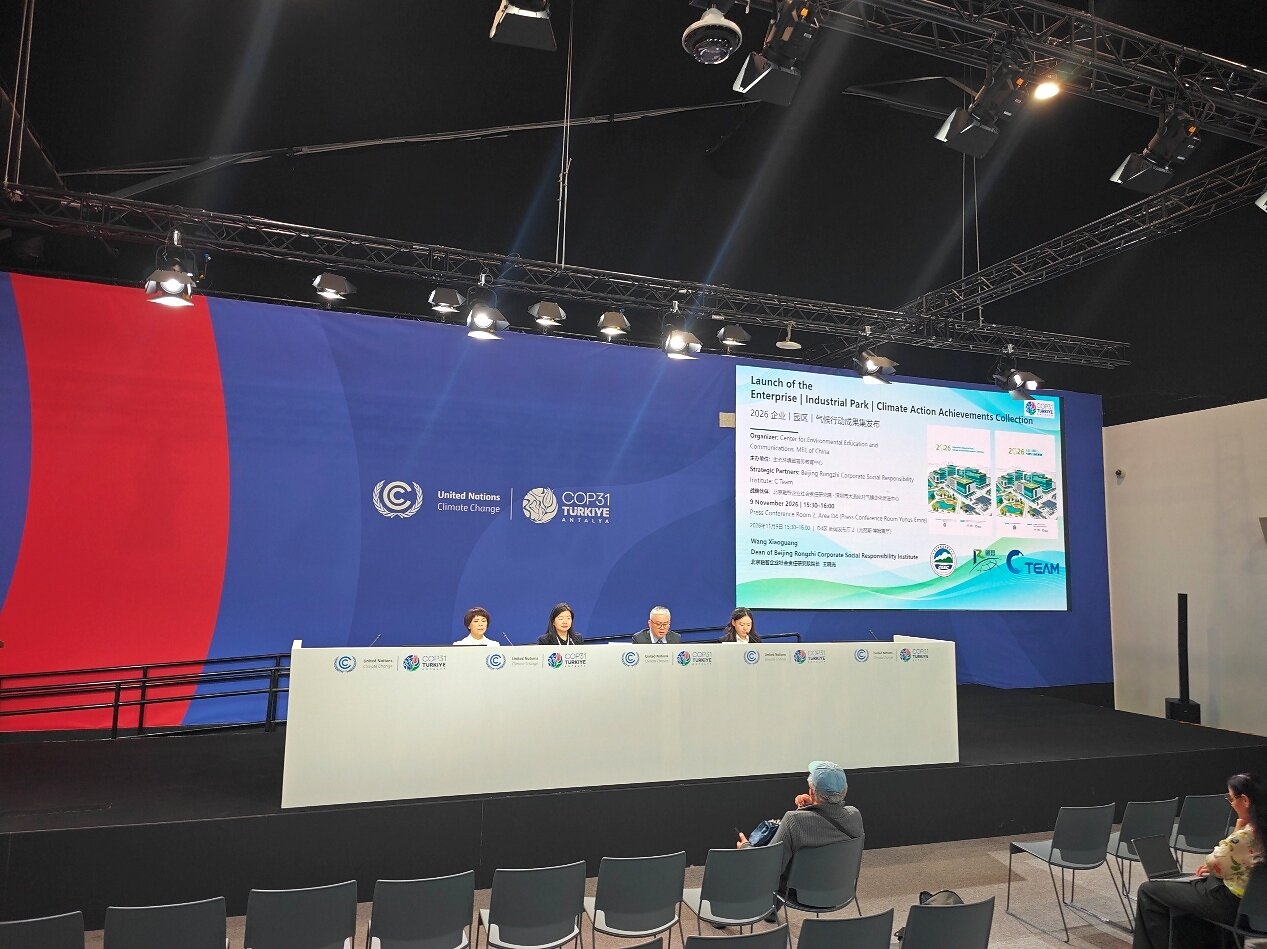
The 2026 Enterprise (Industrial Park) Climate Action Achievements Collection was unveiled on 9 November at COP31 in Antalya, in the UNFCCC Secretariat's press briefing room, at an event hosted by the Center for Environmental Education and Communications of the Ministry of Ecology and Environment. Two of State Grid Corporation of China's park practices were selected for the collection, State Grid said.
The electrification figure behind it
According to the company, COP31 placed heavy emphasis on electrification, with electricity projected to reach 35% of global end-use energy consumption by 2035, and industrial parks concentrate both energy use and carbon emissions. State Grid said it has been building a new-type power grid around new architecture, new technologies and new services.
Suzhou reliability and Liyang microgrids
State Grid's Suzhou Power Supply Company delivers clean hydropower to the Suzhou Industrial Park over ultra-high voltage lines and operates what the company calls China's largest active distribution network demonstration zone, with 99.999% power supply reliability in the core area and 100% local consumption of renewable energy. The Liyang High-Tech Zone has built the largest microgrid cluster in its province and one of China's first green power direct connection projects, arranged so that the main grid assures supply, the distribution grid provides mutual support and microgrids can run autonomously.
Platforms and carbon services
Suzhou's virtual power plant platform offers 79.4 MW of adjustable capacity with 98% demand response accuracy, State Grid said. Liyang built China's first SGS-certified electricity-carbon factor platform, which uses AI agents to optimise green power consumption. Suzhou helped set up China's first regional market-based carbon inclusion service system, serving more than 600 enterprises and issuing 500,000 tonnes of carbon reductions, of which 190,000 tonnes have been traded. Liyang's electricity-carbon coordination mechanism supported the export of China's first batch of carbon-neutral transformers. State Grid said its park work shows grid companies moving from power suppliers to system integrators of the green transition, a model the company describes as replicable for parks with different resource endowments.