Biomass hydrogen with carbon capture
Researchers at Jeonbuk National University in South Korea have examined the climate performance of making hydrogen from biomass while capturing the carbon dioxide released in processing and storing it underground, a combination known as bioenergy with carbon capture and storage. The university said the paper appeared online on 19 May 2026 and was published in Volume 456 of Bioresource Technology on 1 September 2026.
Grid power versus on-site generation
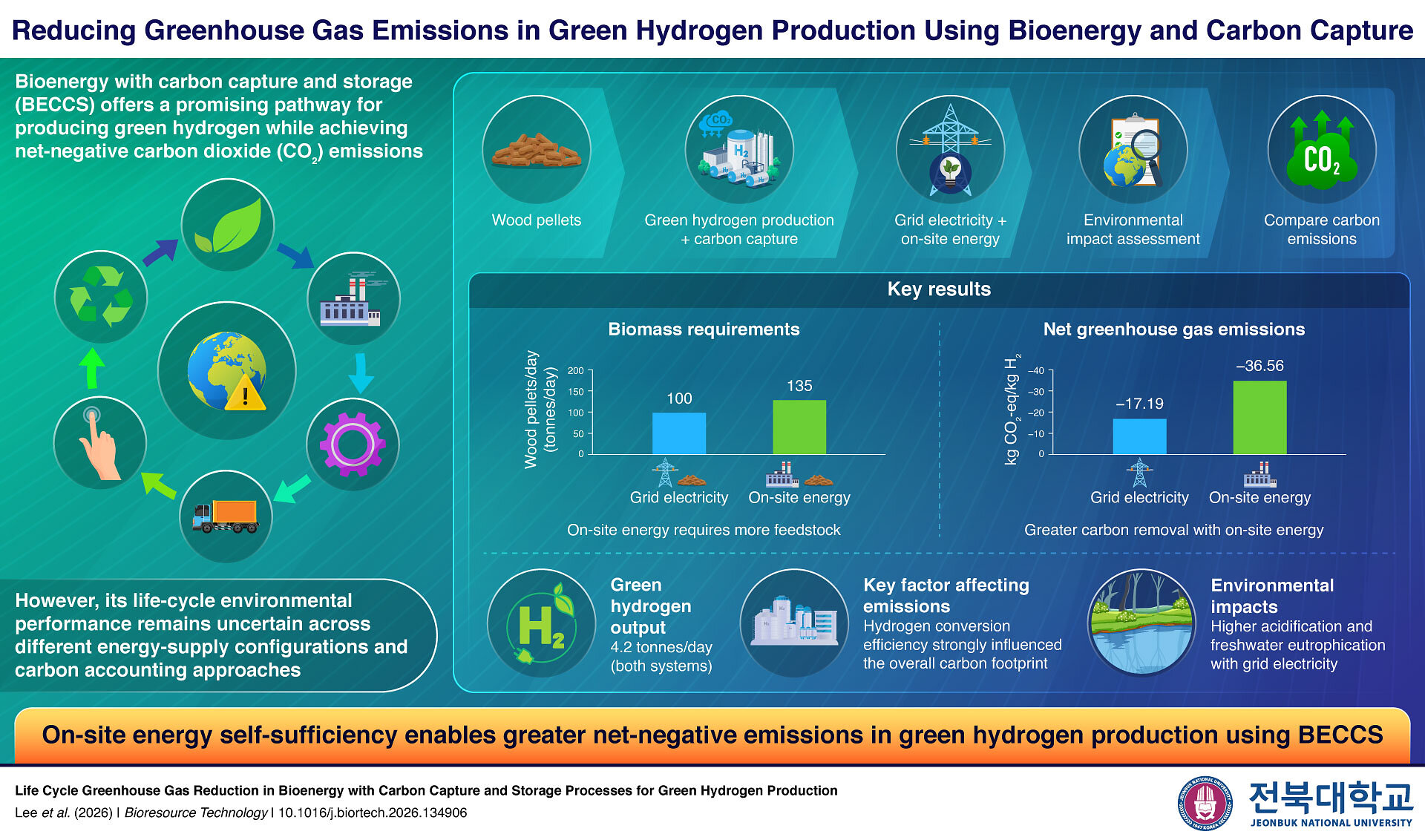
The assessment covered emissions from biomass supply and transport through hydrogen production to carbon storage. It compared two systems built to produce similar amounts of hydrogen: one running on electricity from the power grid, and one generating its own power from additional biomass and heat recovered during production.
Both were found to have the potential for net-negative greenhouse gas emissions, removing more from the atmosphere than they release. Under the study's assumptions, the system that generated electricity on-site delivered substantially larger climate benefits, drawing less on grid power for energy-intensive operations.
Other effects and caveats
The assessment also identified effects on soil and freshwater ecosystems, which the researchers said means the wider environmental consequences of such plants need to be weighed. Hydrogen production efficiency and sustainable sourcing of biomass were found to play important roles in the overall environmental impact.
See Hoon Lee, a professor at the university, said the full supply chain had to be understood before these systems could be judged to deliver meaningful climate benefits. Ha Eun Lee, the paper's first author and a doctoral researcher at the university, said the choice of electricity supply strongly influences environmental performance, and that reliable carbon-negative outcomes would depend on efficient processes combined with clean power and responsible biomass sourcing.