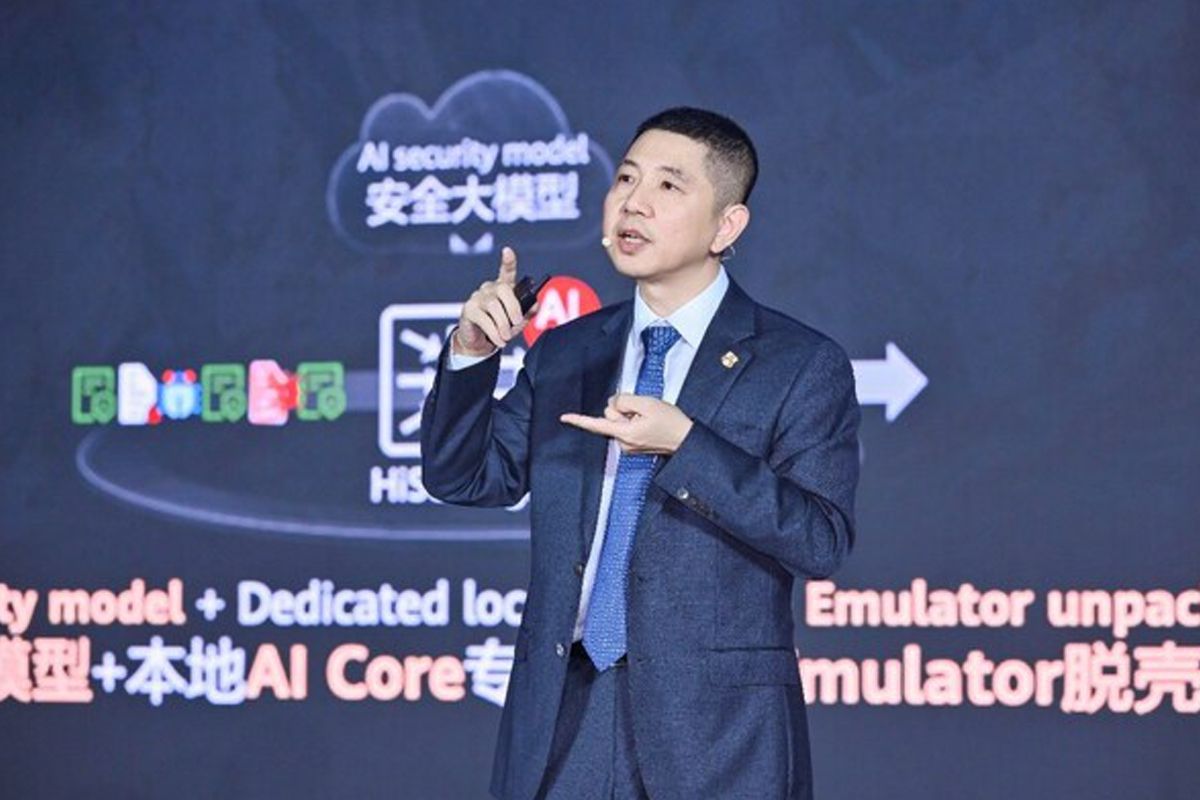
Huawei has launched an upgraded version of its Xinghe AI network security product at a data communication summit held during its Huawei Connect 2025 event in Shanghai. The company says the suite builds what it calls a zero-trust foundation across branch offices, campuses and data centres, and brings secure access service edge functions into a single system managed through one controller.
The figures in the announcement are specific. Huawei says the platform reaches a 99 per cent automated threat response rate, that its branch gateway detects 95 per cent of unknown threats using a malware-unpacking engine, and that a campus product identifies more than 95 per cent of connected assets so it can generate isolation rules automatically and slow the spread of an intruder.
Percentages without a test set
Each of those numbers is a performance claim, and none of them means much without three pieces of context that the release does not give: what the system was measured against, how many false alarms it raised, and who ran the test. A detection rate on a chosen sample can be raised by choosing an easier sample, and a 99 per cent response rate says nothing about whether the response was correct.
The problem being solved is real. Offices, factories and campuses are full of devices that security teams did not install and cannot see, and repeated manual policy work is how isolation rules drift into being useless. A system that maps assets and writes its own rules addresses that. The honest question for a buyer is not whether the features exist but whether the vendor will share its test methodology — and the answer to that is the thing the announcement leaves out.