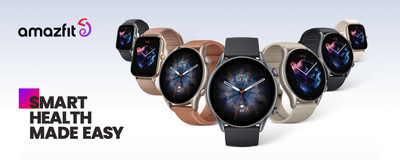
Amazfit has launched three smartwatches — the GTR 3 Pro, the GTR 3 and the GTS 3 — the first to run Zepp OS, the operating system its parent company Zepp Health built for wearables rather than adapted from a phone. The company says the three watches measure heart rate, blood oxygen, stress and breathing rate in a single tap of about 45 seconds, and that all three watch the heart rate continuously and record sleep stages through the night.
Zepp Health's founder and chief executive, Wayne Huang, described the series as smart health made easy and said the operating system was designed around health rather than general computing. The GTR 3 Pro carries a 1.45-inch display and, the company says, up to twelve days of battery; the GTS 3 is the slimmest of the three. Prices start at EUR 149.99 in Europe and USD 179.99 in the United States.
What a one-tap measurement is worth
Wearable health features have a habit of being announced faster than they are used. A reading is only as useful as the decision it informs, and a watch that samples blood oxygen or heart rhythm for its owner is not the same as one a clinician can act on. Amazfit's own footnotes say as much: the devices are not medical instruments, cannot be used for medical purposes, and their results are for reference only, with movement and skin conditions affecting accuracy.
That is less a criticism of the product than a description of the category. Consumer wearables sell monitoring; medicine sells diagnosis, and the two are separated by regulation and by the follow-up that a notification cannot provide. The company says it has shipped more than 100 million devices since 2014 and sells in more than 90 countries, which means that most of the people who receive an alert about an irregular heart rate receive it without anyone attached to interpret it.
Whether that changes behaviour is a question the launch answers with a specification sheet rather than a study. The interesting figure here is not the battery life but the distance the device keeps from being a medical instrument — and who, in the end, is expected to close it.