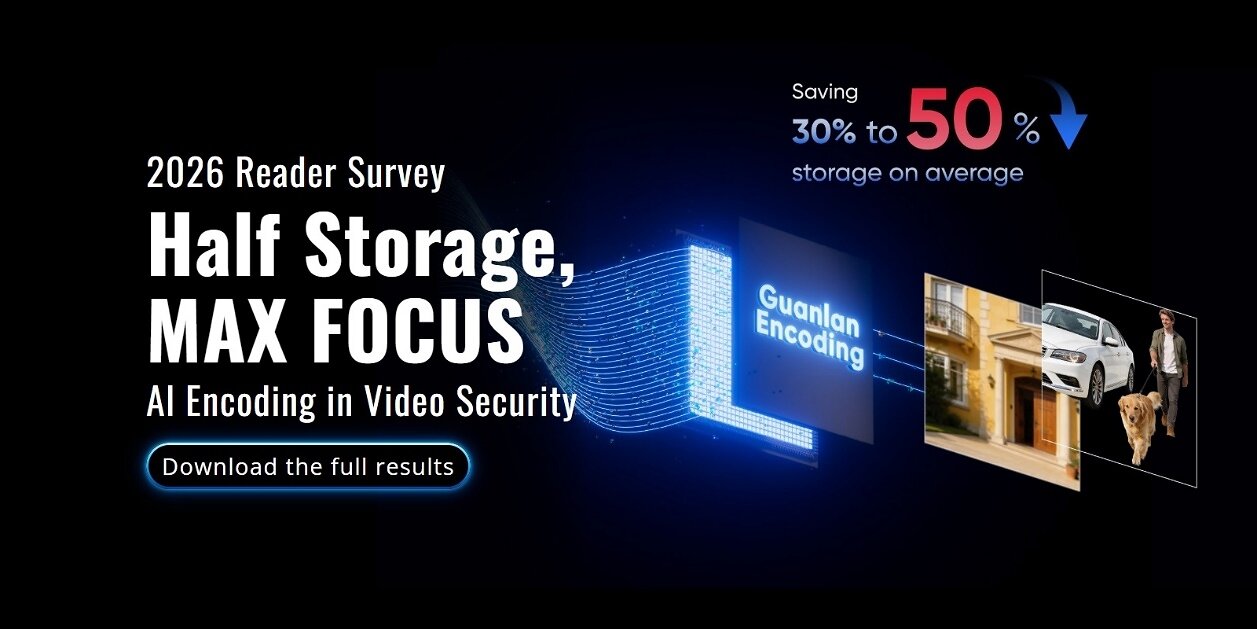
Hikvision has developed Guanlan Encoding, a technology that uses AI to identify the areas of a video image that carry more or less information and encodes each frame accordingly. To gauge the potential impact, asmag.com and Hikvision ran a survey of asmag readers, titled "AI encoding technology for video security," asking about their experience with the storage challenge and where they see potential for AI-based encoding in their projects.
In the results, 38.2% of respondents called video storage cost or capacity a "major challenge," the second most common answer, just behind the 43.2% who called it a "moderate" challenge. Asked whether that challenge had changed over the previous 12 months, the largest share, again 43.2%, said it had "increased moderately."
Guanlan Encoding is built on the H.265 standard and brings Hikvision's Guanlan Large-Scale AI Model into continuous encoding workflows. Instead of compressing every part of a frame to the same degree, it works out which parts of a scene matter most, such as people, vehicles and other moving objects, and assigns them more detail, while static or low-motion background footage is compressed more heavily.
Hikvision said this mix of compression rates inside a single frame reduces storage needs by 30% to 50% on average without losing the details that matter for investigations and monitoring. The survey found 43.3% of respondents familiar with Guanlan Encoding but without hands-on experience of it, and 8.3% already using it. Hikvision said the survey showed the severity of the storage challenge and its position to offer a fix, with Guanlan Encoding using AI to reduce the burden that more data places on storage infrastructure rather than to produce more data.