Revenue up 26.9% in eight months
Enterprises above designated size in Zhejiang's core AI industry recorded 582.87 billion yuan ($87.2 billion) in revenue in the first eight months of 2026, up 26.9 percent year on year, according to a China Daily report on the province's AI sector. The number of core industry enterprises rose to 2,112, in a layout that the report said spans chips, large models, intelligent agents and application services.
Computing power reaches 197 EFLOPS
Zhejiang's computing power stood at 197 EFLOPS at the end of September, a level the report ranked among the highest in the country. A province-wide integrated computing network built by China Mobile's Zhejiang branch supports uses such as pattern generation at a sock factory in Zhuji and product images and marketing videos produced from a single click by traders in Yiwu. Qiu Xiaoyuan, a manager at the branch, said the Hangzhou and Jiashan intelligent computing centres would allow millisecond-level access to computing, integrated scheduling of computing and network resources, and one-stop security assurance. The report also said 54 enterprises and institutions in the province received national computing-power vouchers totalling 408 million yuan, 37 percent of the national total.
Open source and domestic NPUs
The province's 2026 government work report set the goal of taking a leading position in AI development and building an open-source ecosystem, listing open source as one of the strategy's core levers. The Qwen and DeepSeek models continue to be updated, and the ModelScope community in Hangzhou's Xihu district brings together more than 29 million AI developers and more than 200,000 models. Chen Tianrun, a Zhejiang University doctoral student and founder of Moxin Technology, said his company developed the MoWorld real-time interactive world model entirely on domestic neural processing units. Chen said he saw people and AI working together to raise productivity rather than AI replacing people.
Wuzhen summit closes
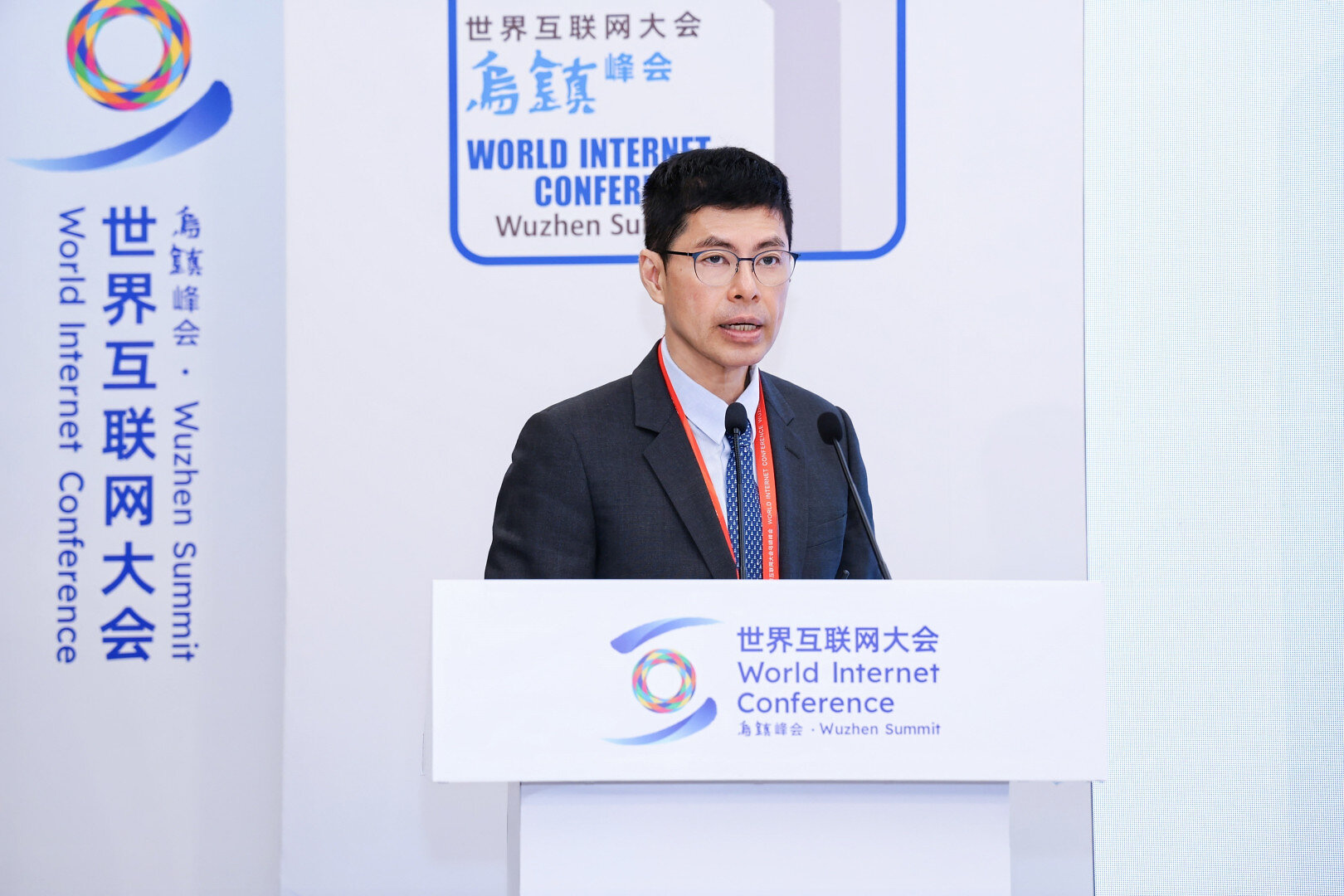
The 2026 World Internet Conference Wuzhen Summit, hosted by the provincial government, ended on Thursday after four days. At the Light of Internet Expo on Monday, more than 30 embodied-intelligence robots from companies including AgiBot, UBTech, Unitree and Zhongke Fifth Era were shown, among them the centrepiece: a bipedal humanoid that plays badminton against people on its own and has also taken up table tennis. The Straight to Wuzhen competition drew 1,347 projects and one-person company entries from 31 countries and regions after registration opened in June, and the report said annual signings of digital economy industrial projects at the Digital Economy Industrial Cooperation Conference have each exceeded 100 billion yuan over the past three years.