Samsung held the ninth edition of its AI Forum on 15 and 16 September, splitting it between its semiconductor business near Yongin in Korea and an online day run by the division that makes phones and televisions. The theme moved on the second day from generative to agentic systems, the industry's shorthand for models that carry out tasks rather than answer questions.
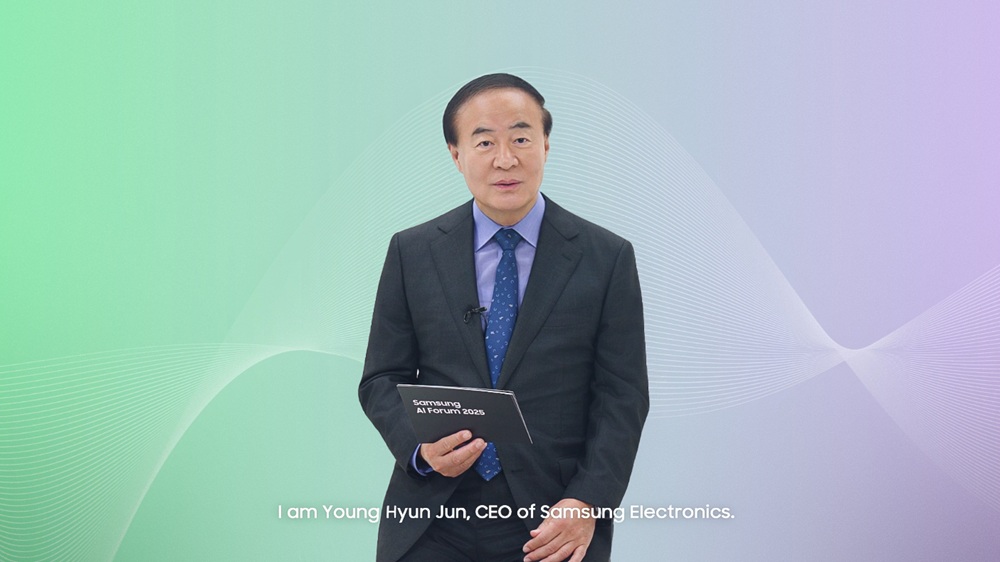
Young Hyun Jun, the vice chairman and chief executive, said Samsung applies artificial intelligence across its own operations to make the technology feel more intuitive, and the agenda reflected it: chip design, electronic design automation and on-device assistants all appeared. Yoshua Bengio, a deep-learning pioneer at the University of Montreal, used his keynote to argue for what he calls Scientist AI, built to give answers grounded in verified facts rather than to please the user, and Stefano Ermon of Stanford spoke on the same theme.
What an internal conference reveals
Samsung also used the event to describe on-device work in its own products, including camera adjustments, automatic dubbing and document tools. Yong Ho Song, who heads the AI centre in the semiconductor division, said AI is already an essential part of chip design and software work. An academic award went to three researchers, from Toronto, UC San Diego and New York University.
None of it is a product. An internal forum is a place to set direction, and the release gives no launch dates, prices or shipping details for the systems described. The interesting signal is the shift in language: a company that spent two years talking about putting AI in its devices is now talking about AI that does things on them, which is a harder feature to demonstrate and a harder one to trust.
Whether agentic features reach users before buyers stop asking what they are for is the question left open.