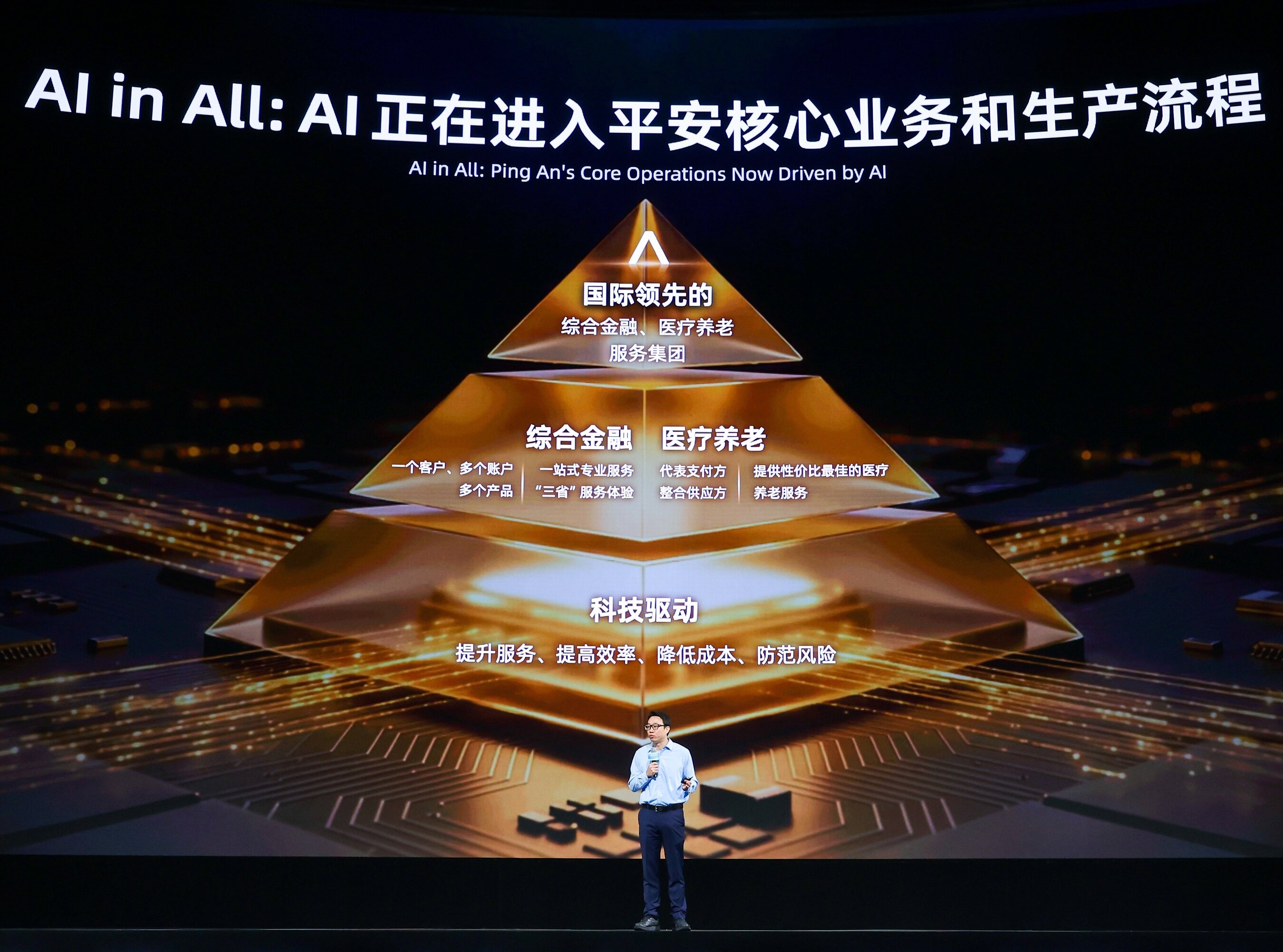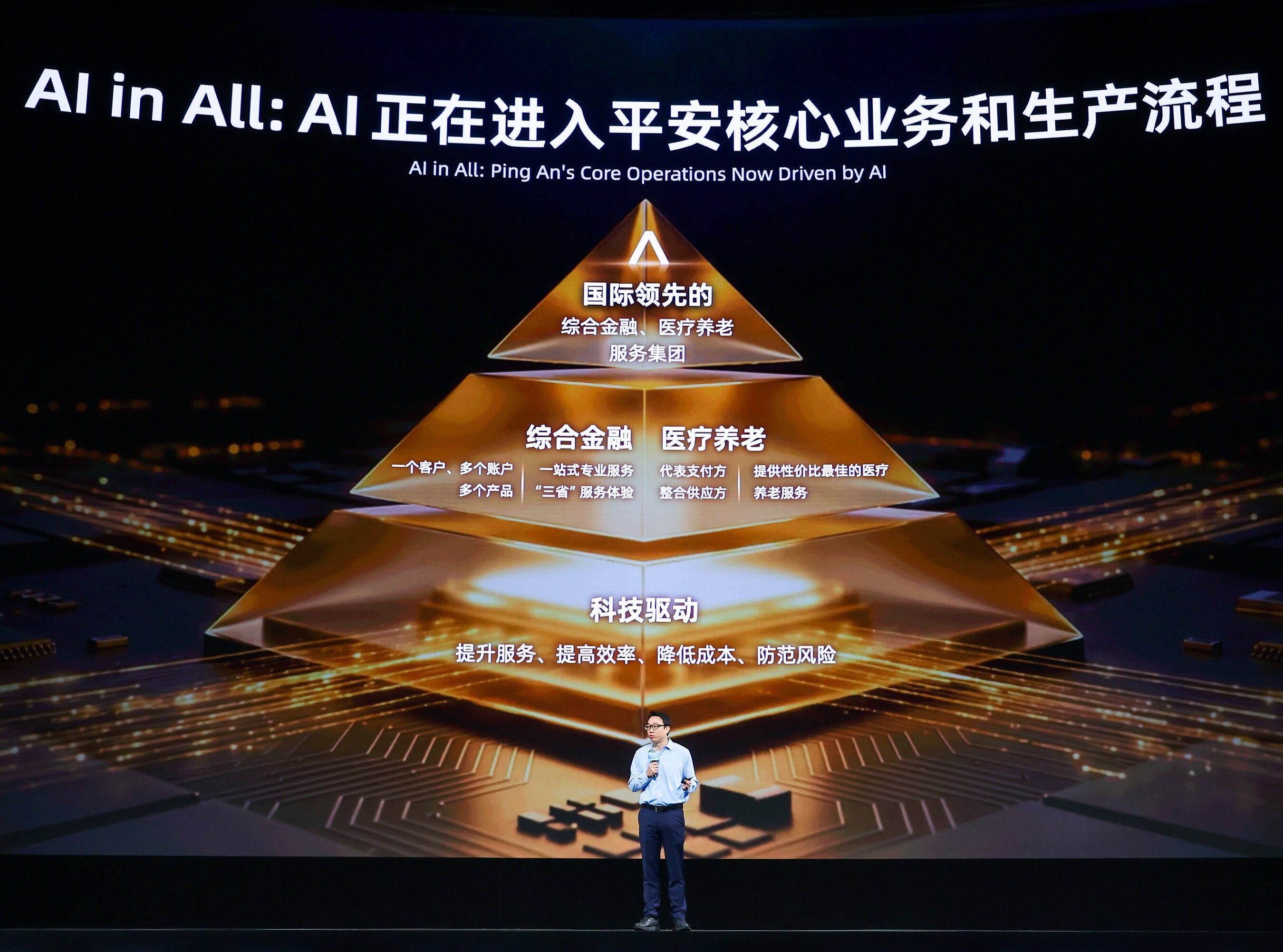
Ray Wang, chief technology officer of Ping An Insurance (Group) Company of China, spoke at the 2026 Apsara Conference in a presentation titled "From Tokens to Value: Ping An's Approach," Ping An said. He said that while AI capabilities continue to advance, the central question for enterprises is how to put AI to work in real business scenarios at a manageable cost and produce measurable value. The group said it has embedded AI across its core businesses and operations under its "integrated finance + health and senior care" strategy and an "AI in ALL" approach.
The group's AI-powered Express Service, launched four months ago, lets customers complete requests through natural language, the company said. It now covers more than 300 commonly used services, including transactions, financing and claims, and has recorded over 100 million user interactions. The company reported an end-to-end resolution rate of 92% and said average processing time has fallen by more than 50% against traditional service models.
Ray said the group's computing capacity rose from 800 PF to 1,500 PF over the past year, while average daily token consumption increased from 30 billion at the end of last year to more than 300 billion. He said that roughly doubling computing capacity supported a tenfold rise in token consumption while keeping costs under control. Full-stack work across foundation models, inference engines and computing resource scheduling raised token output per unit of computing power by 368% and cut cost per token by 76%, according to the company.
On healthcare, the company said its AI Doctor supports the full journey from consultations and multidisciplinary diagnosis and treatment to ongoing health management, drawing on medical resources from PKU Healthcare Group and work with institutions including PUMC Innovation Port. It is the first point of contact for 25% of in-hospital services, and its annual service volume is expected to pass 100 million by the end of the year. In multidisciplinary diagnosis and treatment for breast and gastric cancer, AI assessments were consistent with expert conclusions in 91% of cases, and the AI hallucination rate stayed below 0.3%, the company said.
Internally, AI-generated code accounts for about 80% of total code output and roughly 20% of routine development tasks can be delivered end to end by AI, according to Ping An. AI service representatives handled 81% of the group's customer service volume in the first half of the year, quick claims accounted for 59% of life insurance claims, and Ping An P&C recorded RMB7.11 billion in claims savings from AI-powered fraud detection in the same period. Ray said specialised sectors such as finance and healthcare require domain-specific intelligence, and that Ping An has built a framework combining proprietary data, expert-defined standards, production-grade quality controls and feedback from real business scenarios.