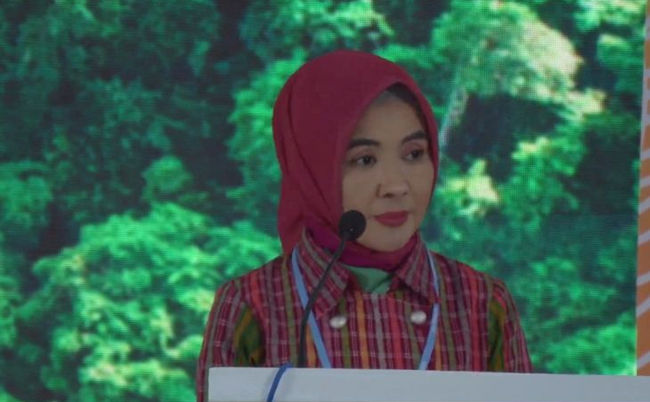
Pertamina, Indonesia's state energy company, used a panel at the COP27 climate talks in Sharm El Sheikh to set out how it intends to reach net-zero emissions, a goal it shares with the country's 2060 target. Its president director and chief executive, Nicke Widyawati, said the company has set its own goal of cutting emissions by 30 per cent by 2030, measured against a 2010 baseline.
The company reports that it reduced greenhouse gas emissions by 7.4 million tonnes of carbon dioxide equivalent in 2021, which it puts at 29.09 per cent below the 2010 level. Much of that came not from new energy but from operations: about 69.7 per cent of the reduction is attributed to using process emissions as fuel and gas supply, 13.9 per cent to more efficient equipment, and 16.2 per cent to low-carbon energy sources.
Reading a reduction against its baseline
A percentage measured against 2010 depends heavily on what 2010 looked like, and a company that grew or shrank in the years since can move the figure without changing much on the ground. The disclosure of where the reductions came from is more informative than the total, because it shows that most of the early progress is efficiency and re-use rather than a switch of fuels.
For the longer term, Pertamina cites cumulative capital spending of about USD 40 billion to 2060 on biofuels, renewables, carbon capture and storage, batteries and electric vehicles, hydrogen and carbon trading. That is a projection over nearly four decades, offered by the company itself, and it is not the same as money committed.
Indonesia has raised its national emissions-reduction target, and an oil and gas company is central to whether the country meets it. Whether the strategy reduces emissions or mostly reframes them is the question a single set of self-reported figures cannot settle.