What was presented
Eisai Co., Ltd. and Biogen Inc. said findings from an analysis of lecanemab treatment and alpha-synuclein co-pathology in the cerebrospinal fluid substudy of Clarity AD were presented at the 19th Clinical Trials on Alzheimer's Disease conference in Boston and online. The companies said the work was an oral presentation titled "Lecanemab Treatment and alpha-Synuclein Co-Pathology in the Clarity AD CSF Substudy."
The numbers
According to the companies' announcement, 623 cerebrospinal fluid samples collected at screening or baseline were assessed with the Amprion SYNTap seed amplification assay. Among amyloid-positive participants with alpha-synuclein results available, 400 formed the alpha-synuclein-tested group. Prevalence of alpha-synuclein pathology was 20.4% in the amyloid-positive group against 10.0% in the amyloid-negative group (p=0.001).
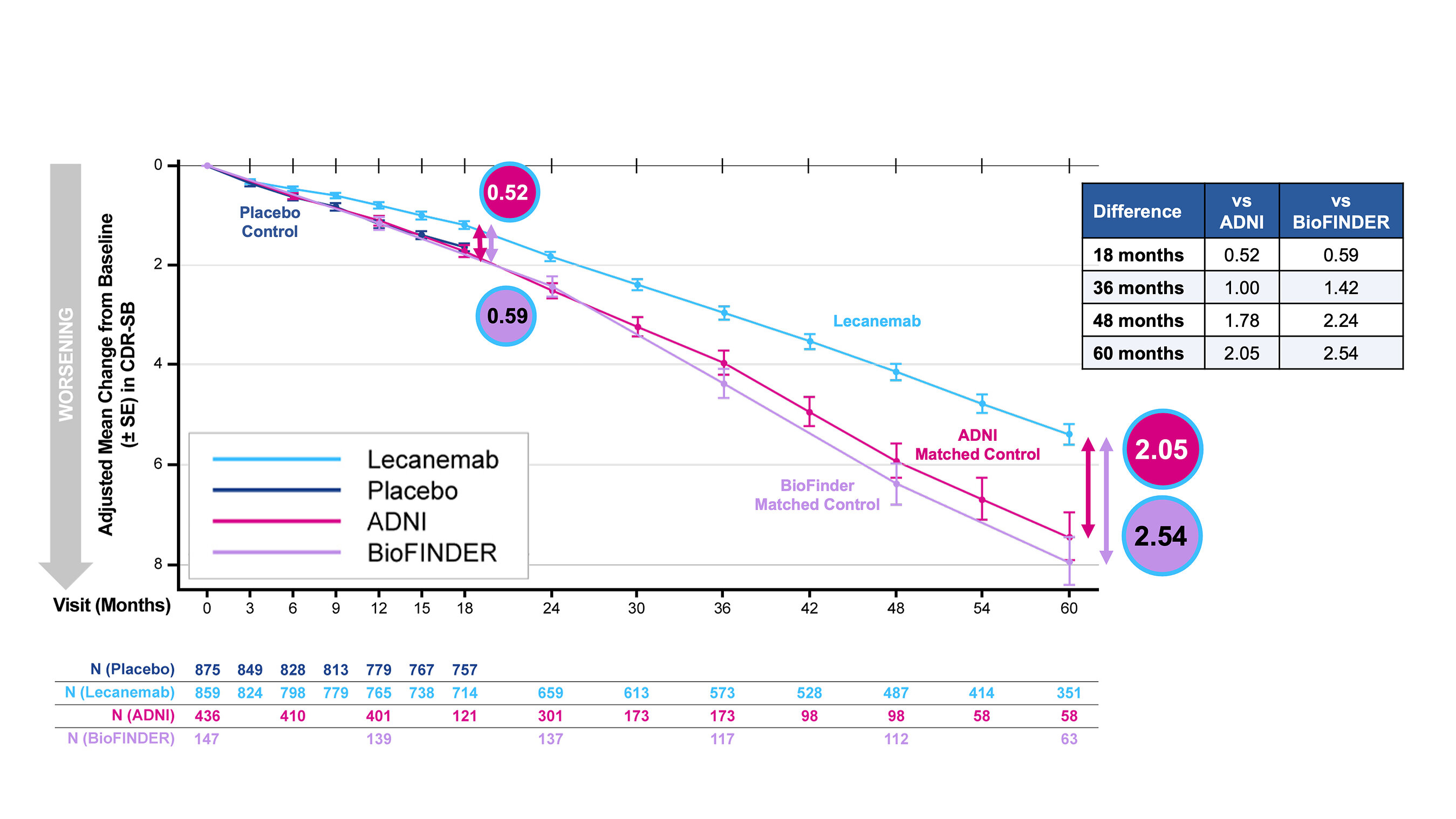
Mean baseline amyloid burden was 86 Centiloids in the alpha-synuclein-positive group and 67 Centiloids in the alpha-synuclein-negative group (p=0.016). On CDR-SB, the reduction in decline versus placebo at month 18 was 27% in the overall Clarity AD population, 26% in the alpha-synuclein-tested group and 41% in the alpha-synuclein-positive group. On ADAS-Cog14 the figures were 26%, 45% and 43%, and on ADCS MCI-ADL 37%, 30% and 43%.
How the companies describe it
The companies said the alpha-synuclein-positive group numbered 82 and that the analysis of that group was exploratory and post hoc. They said the findings suggest lecanemab provides clinical benefit in people with alpha-synuclein co-pathology. Eisai said it leads development and regulatory submissions globally, with the two companies co-commercializing and co-promoting the product and Eisai holding final decision-making authority.