Eisai and Biogen presented five-year results from the long-term extension of the Clarity AD study of lecanemab at the 19th Clinical Trials on Alzheimer's Disease conference, held in Boston and online, the companies said. The Phase 3 trial enrolled 1,795 patients with early Alzheimer's disease, 898 of whom received lecanemab at 10 mg/kg by intravenous infusion every two weeks and 897 of whom received placebo. Ninety-five per cent of patients who completed the 18-month core study chose to enter the extension, and 351 patients received continuous treatment for five years.
Gap to natural history widens
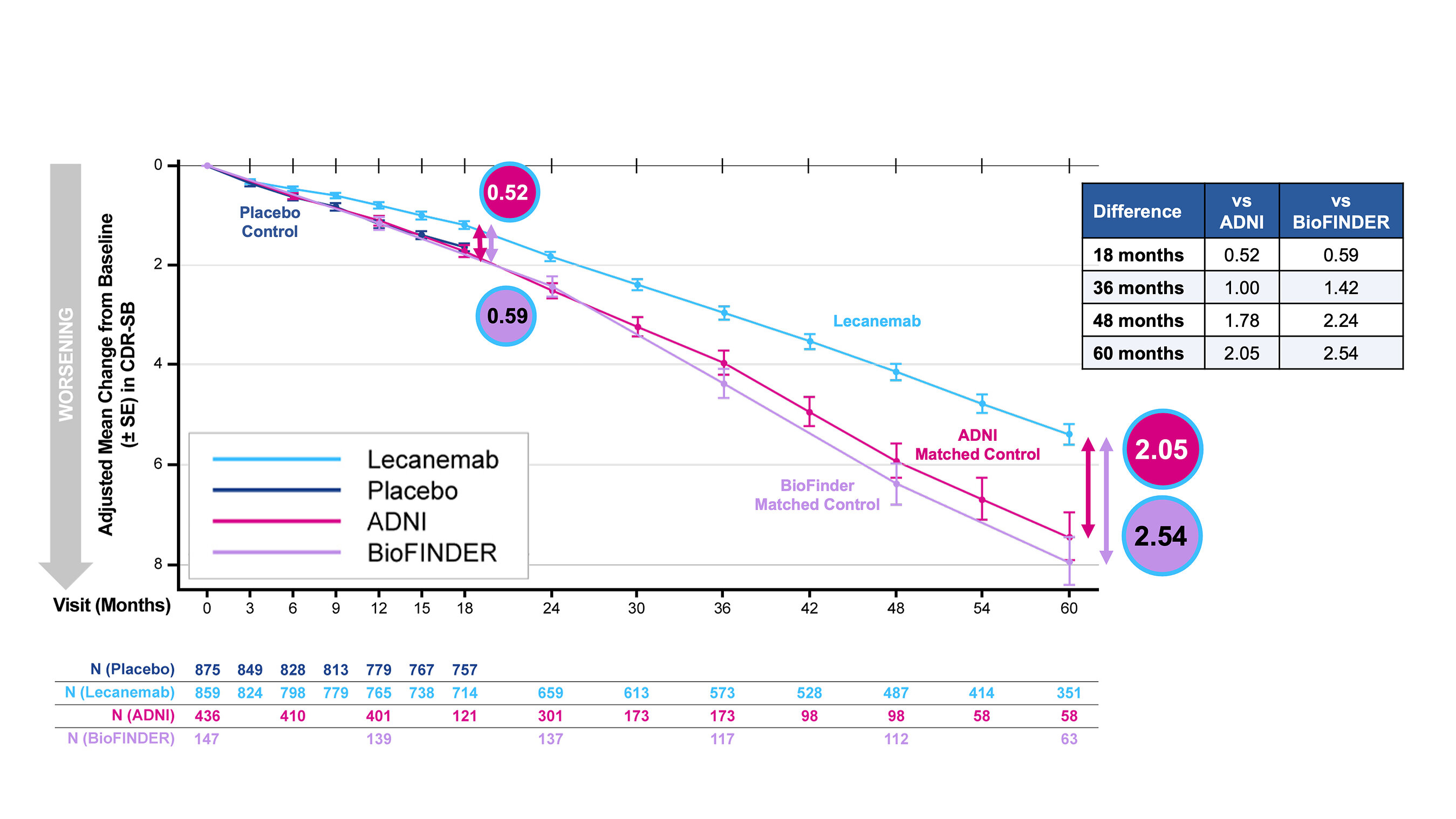
On the CDR-SB scale, the mean change from baseline among continuously treated patients differed from the decline recorded in Alzheimer's Disease Neuroimaging Initiative data by −1.00 points at three years, −1.78 points at four years and −2.05 points at five years. Against BioFINDER data, the differences were −1.42, −2.24 and −2.54 points at the same intervals. The companies said the benefit continued to accrue over time.
Lecanemab reduced the relative risk of progressing to the next stage of disease by 36% compared with ADNI: 61.9% of treated patients moved from mild cognitive impairment to mild dementia, or from mild to moderate dementia, by five years, against 77.5% in the ADNI data. The relative risk of progression from early to moderate or severe dementia fell by 49%, with 31% of treated patients reaching that stage against 48.7% in the ADNI data.
Low-tau patients at five years
In an optional tau PET substudy, 66% of patients with low tau showed no decline on the CDR-SB after five years of treatment and 62% showed improvement. On the ADAS-Cog14, 55% showed no decline and 52% showed improvement; on the ADCS MCI-ADL, 69% showed no decline and 62% showed improvement. The companies said the findings suggest that starting and continuing treatment in the earlier biological stages of the disease may help slow clinical decline.
Safety over five years
No new safety findings were observed over five years of continuous treatment, the companies said. Amyloid-related imaging abnormalities with edema or effusion occurred most often within the first six months; grouped into 12-month intervals, incidence was 13.5% in the first year and 3.6%, 1.1%, 1.3% and 0.6% in the years that followed, against 1.7% in the placebo group over 18 months.