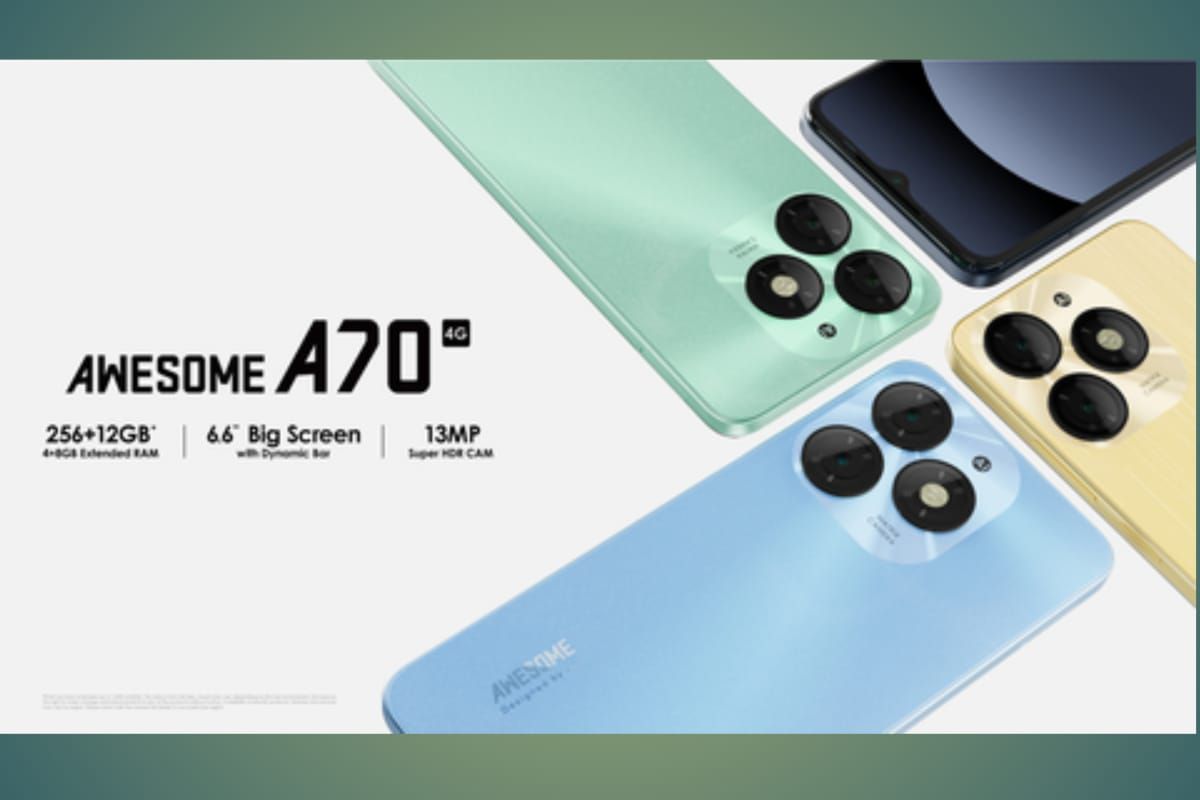
itel, a phone brand that sells to buyers on tight budgets, has announced a new entry-level handset, the A70. The device, made by a Shenzhen company, is aimed at emerging markets and leads with the numbers that matter in that part of the market: storage of up to 256 gigabytes, memory it says can be extended to a nominal 12 gigabytes, and a 6.6-inch screen with a 5,000 milliamp-hour battery and USB-C charging.
The company says the extra memory cuts app start-up times by about 60 per cent, and that a feature it calls Dynamic Bar shows battery level, incoming calls and lock status without opening an app. It also points to a 13-megapixel main camera and an 8-megapixel front camera, and to a technology it says reduces network latency by a fifth in places where the signal is poor. It says the phone runs Android 13.
Specifications, and the price that is missing
The reason to pay attention to this segment is that most of the next billion phone users will buy at this end of the market, and how good a cheap phone is shapes what those people can do. itel says it keeps costs down by making components itself and passing the saving on, which is the pitch every budget brand makes.
The release is a specification sheet rather than a launch. It gives no price, no date of sale and no list of the countries where the phone will appear, saying those will be unveiled later — which makes it hard for a buyer to weigh the A70 against the many other phones at the same level. A storage figure of 256 gigabytes and a claim about app speed are the kind of details that read well and can still disappoint in daily use, where a slow processor or a crowded screen matters more. The announcement is the beginning of the story, not the decision a buyer actually makes.