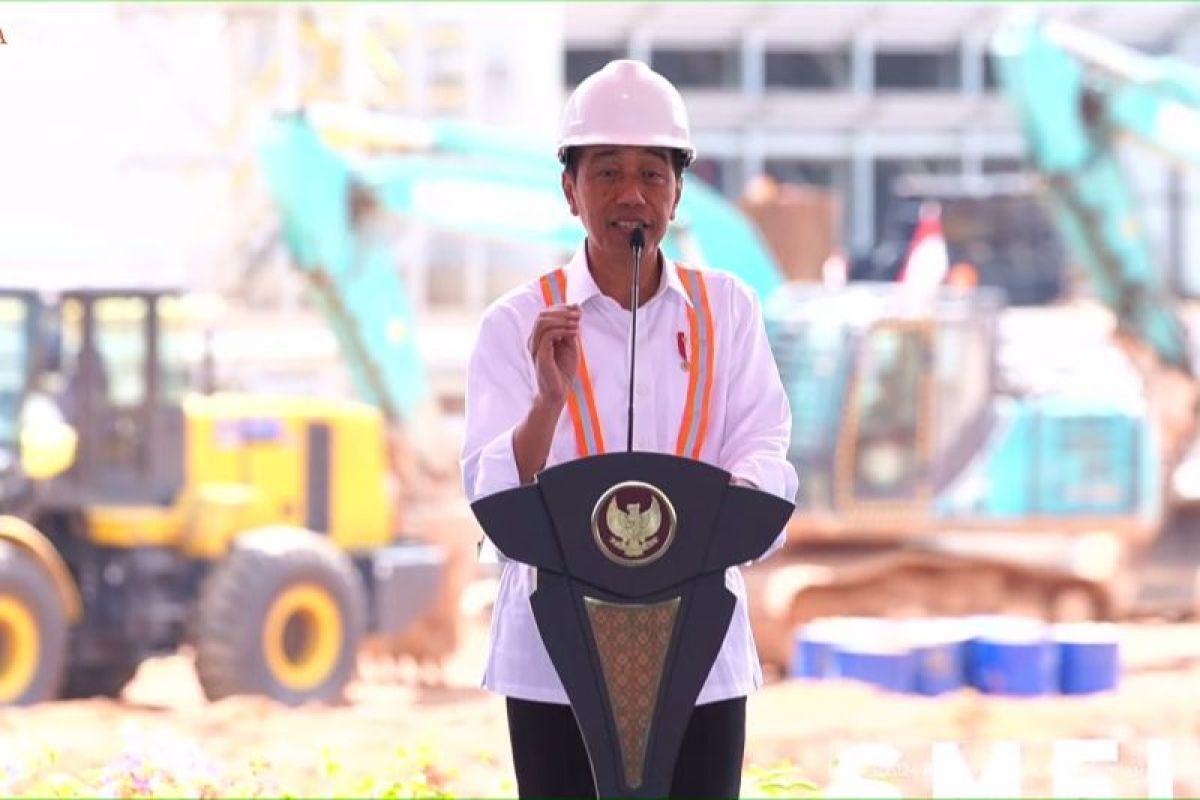
President Joko Widodo has inaugurated the first bauxite injection facility at a smelter-grade alumina refinery run by PT Borneo Alumina Indonesia in Mempawah, West Kalimantan. The refinery, known as SGAR, has an alumina production capacity of up to one million tonnes a year and an investment value the president put at Rp16 trillion, or about USD 1 billion.
The ceremony was the latest in a run of mineral-processing openings. A copper smelter belonging to PT Amman Mineral in Sumbawa, West Nusa Tenggara, began operating a day earlier, built on 272 hectares at a cost of Rp21 trillion and able to process 900,000 tonnes of copper concentrate a year, with 139,000 tonnes of silica flux alongside. A Freeport Indonesia smelter in Gresik, East Java, came in at Rp56 trillion, and the government expects higher state revenue as a result.
Downstreaming, and what it costs to finish
The policy is called downstreaming: process raw ore at home rather than export it, and capture more of the value. For aluminium, the plan links bauxite from PT Aneka Tambang in West Kalimantan to the Inalum smelter in North Sumatra, a supply chain that has to work in practice as well as on a diagram.
The president's frame is that these are the beginnings of industrialisation in the country. The figures are the government's, and they describe construction and capacity, not output or profit. Smelters are capital-heavy, power-hungry and exposed to commodity prices, and a refinery capable of a million tonnes is only useful if the ore arrives and the power stays on.
What is missing is the operating economics: unit costs, offtake arrangements and whether the projects earn their capital. Those numbers tend to arrive years after the ribbon is cut.