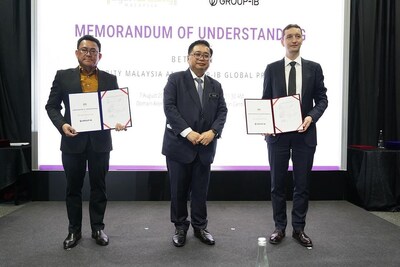
Group-IB, which sells threat intelligence and digital-crime investigations, has signed a memorandum of understanding with CyberSecurity Malaysia, the national cyber agency under the country's digital ministry. Both sides describe the framework as a way to strengthen Malaysia's resistance to digital crime.
The part of the announcement that can be checked is access. Under the arrangement, Malaysian agencies gain entry to Group-IB's Digital Crime Resistance Centres, the company's regional analysis units, for faster work on threats that cross borders. The release also lists intelligence exchange and joint operations against cybercrime.
What a memorandum does not commit
An MOU is a statement of intent rather than a purchase order. It carries no budget, no headcount and no deadline, and the release supplies none of the three. The signing was witnessed by the secretary general of the Ministry of Digital, which shows the government wanted to be seen at the table; it does not show that anything will be deployed.
Intelligence sharing has a second side that such announcements rarely raise. When a national agency feeds incident data into a commercial platform, the vendor gains a detailed picture of a country's threat landscape, material it may later resell in other markets. That can be a fair trade. It is also a data governance question, and the release does not say who controls the material, how long it is kept, or what becomes of it when the arrangement ends.
The test is not the signature but the first joint case: how quickly the centre turns around a live incident, and whether Malaysian analysts or the vendor's staff do the work. Dmitry Volkov, Group-IB's chief executive, framed the agreement as a step towards regional resilience. A signed document is the verifiable part; the things a reader would use to judge the partnership are still ahead of it.