The 5th GMIF2026 Innovation Summit concluded on September 23 at the Renaissance Shenzhen Bay Hotel in Shenzhen, the Shenzhen Memory Industry Association said. The association co-hosted the event with the School of Integrated Circuits at Peking University, under the theme "The Future Built on AI Memory and Storage." Those taking part included integrated device manufacturers, controller and memory solution providers, OSATs, equipment and materials suppliers, server and AI infrastructure vendors, automotive electronics companies, AI application developers, academic institutions and investors. Discussions covered the evolution of memory and storage technology, enterprise-grade storage, cloud-edge-device coordination, industrial capital and the global competitive landscape.
Rixin Sun, president of the association, opened the summit with remarks reviewing GMIF's expansion since it was founded in 2019, now in its fifth consecutive year. He said the summit will take a more specialized and differentiated approach going forward, staying close to frontier industry trends and supply-chain coordination and connecting storage companies with adjacent players in AI compute and end-user applications, in support of technical exchange, supply-demand matching and ecosystem collaboration.
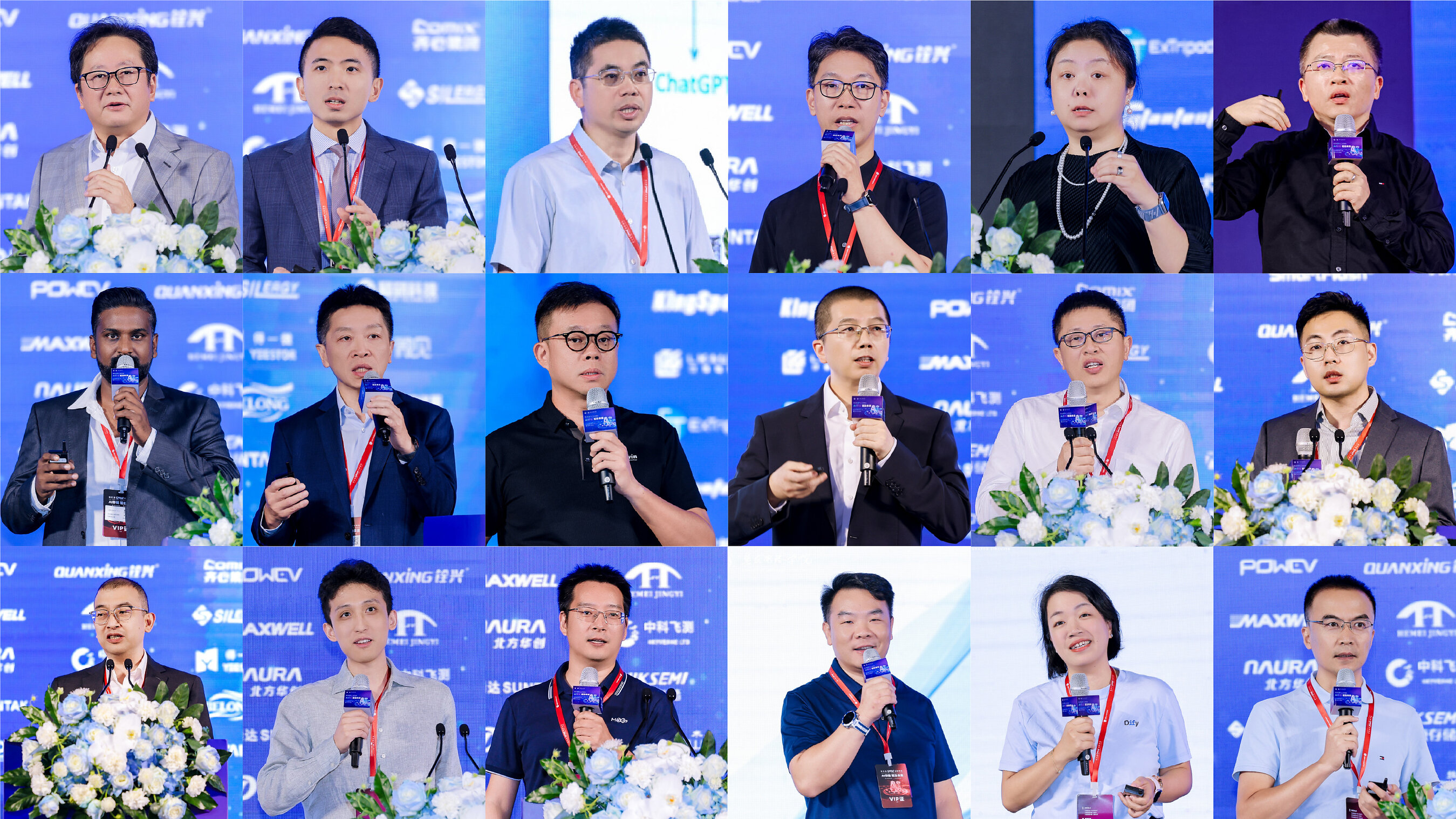
Daniel Yen, an executive director at Morgan Stanley, opened the technical discussion with a look at how generative and agentic AI are reshaping infrastructure demands. He said memory and storage's share of rising AI capital expenditure, and their strategic value, are climbing as model weight loading, KV cache management and data read/write scheduling grow more complex, and pointed to the "memory wall" as a challenge now driving fresh innovation in storage architecture and advanced packaging. Yimao Cai, dean of the School of Integrated Circuits at Peking University, addressed AI inference architecture, high-bandwidth storage and multi-media integration. He said high-bandwidth flash and heterogeneous multi-media storage architectures combining HBM, NAND and RRAM could strike a better balance between performance, capacity and cost for inference.
Kevin Yoon, CVP and CTO of Samsung Memory China at Samsung Electronics, discussed memory architecture in the era of agentic AI, outlining progress on Z-NAND, PCIe Gen6 SSDs and ultra-high-capacity data center SSDs and the use of tiering across storage media for KV cache and model weight storage. Maya Zhang, senior director of product marketing at Sandisk, said NAND flash is becoming increasingly central to AI infrastructure as KV cache demands grow, and that high-density technologies such as QLC are set for broader adoption. Benny Ni, GAR sales VP at Solidigm, said memory offloading and data tiering are becoming core components of AI system architecture, with high-capacity QLC SSDs paired with high-performance storage offering a more efficient and cost-effective data foundation for inference.
Sessions also covered cloud, edge and device deployment. John Xavier Lionel, head of global storage business at Arm, said inference spans compute, memory, storage and data movement and requires holistic architectural optimization, with local storage taking on a larger role in hosting model weights, knowledge bases and application data as small models, quantization and heterogeneous NPUs advance. Sam Sun, chairman of BIWIN, said AI is lifting storage demand in data centers, where training and inference raise requirements for enterprise SSDs and server memory, and at the edge and endpoint, where AI/AR glasses, AI PCs, smart vehicles and industrial equipment are pushing storage toward smaller form factors, lower power consumption, higher reliability and tighter system integration. The association said GMIF will continue to focus on technological innovation, industry trends and supply-chain collaboration.