The global artificial intelligence narrative has long fixated on foundation models and the silicon that powers them. But as the initial wave of generative AI hype settles, the true battleground shifts from compute to context. The next era of AI will be defined by its integration into the physical world—payments, healthcare, cross-border trade—and Shanghai is rapidly positioning itself as the epicenter of this applied AI revolution.
From Silicon to Storefronts
Shanghai's Pudong district, China's first national AI innovation application pilot area, serves as a macro-laboratory for this shift. By the end of 2024, the district's AI industry surpassed RMB 160 billion, accounting for 40% of the city's total GDP. Its ecosystem spans from semiconductor design in Zhangjiang to Lingang New Area's advanced manufacturing.
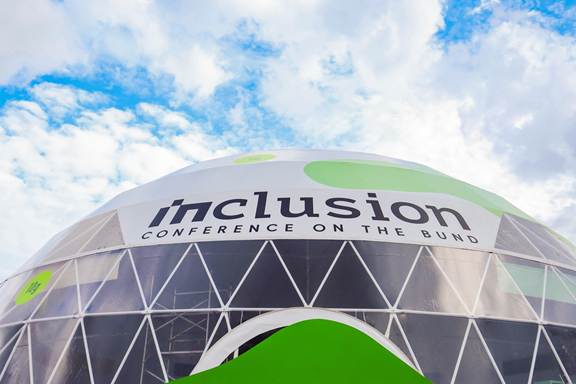
However, Pudong's true differentiator is its density of cross-sector experimentation. This was fully crystallized at the 2026 Inclusion Conference on the Bund. Held this September under the theme "We Create, Together," the event gathered over 300 tech enterprises and made a definitive statement: the industry is pivoting from AI that merely "chats" to AI that "works." With over 40 embodied intelligence and robotics companies demonstrating machines stepping into real-world scenarios, physical execution is the next frontier.
The "Kepler Phase" of Commercial AI
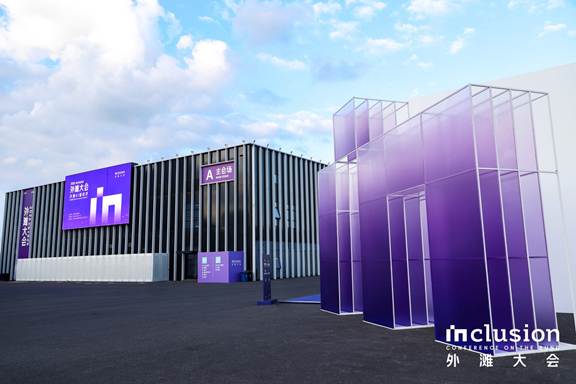
The prevailing view among global technologists and economists at the conference was that AI's true value lies in commercial viability rather than lab benchmarks. Thomas J. Sargent, the 2011 Nobel Laureate in Economics, noted that AI development is currently in its "Kepler phase." Just as Johannes Kepler gathered vast amounts of observational data before Newton could formulate the laws of gravity, today's AI economy is discovering its foundational rules through massive, real-world deployment.
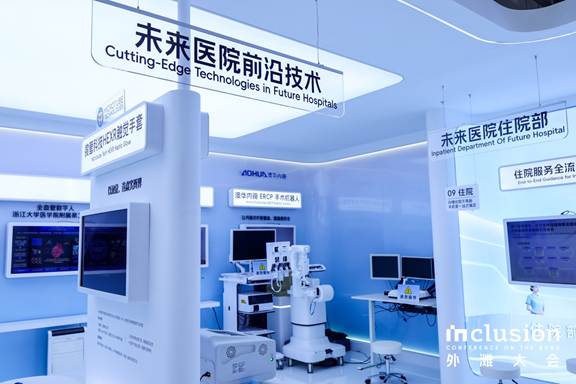
To formulate those laws, AI must engage with the friction of everyday life. This drive was evident in the over 30 AI agent applications deployed in simulated environments at the conference, including "health model rooms" showcasing how inclusive AI can reshape medical triage and remote care.
Pivoting to Applied AI: The Ant Group Case Study
Ant Group, headquartered in Hangzhou, offers a compelling case study of this transition. Under CEO Cyril Han, the company has decisively pivoted from its fintech roots to an AI applications powerhouse.

In June 2025, Ant launched AQ, an AI-powered health companion that has rapidly scaled to over 150 million users. Connecting patients to over 5,000 hospitals and nearly one million doctors, AQ illustrates how AI assistants are evolving to offer deeply integrated medical profiles and daily health goals.
This strategic pivot is backed by significant capital. Ant has poured an estimated several billion RMB annually into AQ and related initiatives, alongside massive scale infrastructure like its "Alipay Tap!" proximity payment system, which handles over 100 million peak daily transactions frictionlessly.
Han frames this as a return to Ant's core ethos: using technology to solve systemic problems. "We are focusing on AI applications, making the breakthroughs in intelligent capabilities benefit everyday life," he noted.
Writing the Rules for Regulated Tech
The deeper narrative emerging from Shanghai is about governance, trust, and standard setting. The city has become a proving ground for the frameworks that make applied AI possible—from digital health standards to cross-border payment protocols.
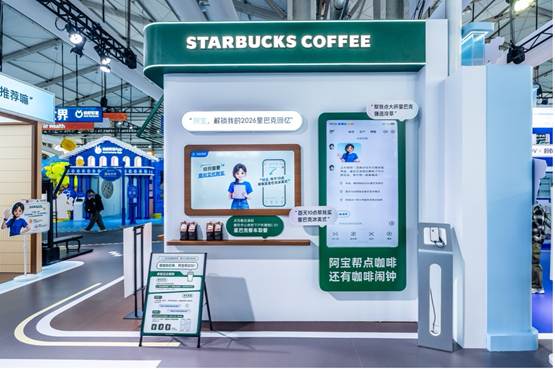
Alipay's recent collaboration with Starbucks on the "Coffee Alarm Clock"—where users order via AI and receive personalized morning notifications—debuted at the conference as a microcosm of AI weaving into urban routines. But the stakes are much higher in regulated sectors. Global players like Stripe and domestic innovators converged at the conference to debate these exact frontiers.
This is Shanghai's unique value proposition for the tech sector: it is not just a place to build AI products, but a sandbox where the rules for how AI operates in the real economy are written. Testing AI applications in heavily regulated domains like financial services and healthcare means navigating compliance, ethics, and scale simultaneously.
The Next Chapter for Asian Tech
The AI era will not be sustained by computing power alone. It requires an environment where software meets the complexities of daily commerce. With its blend of regulatory sophistication, industrial depth, and global connectivity, Shanghai is cementing its role as the crucible for the real-economy AI revolution.