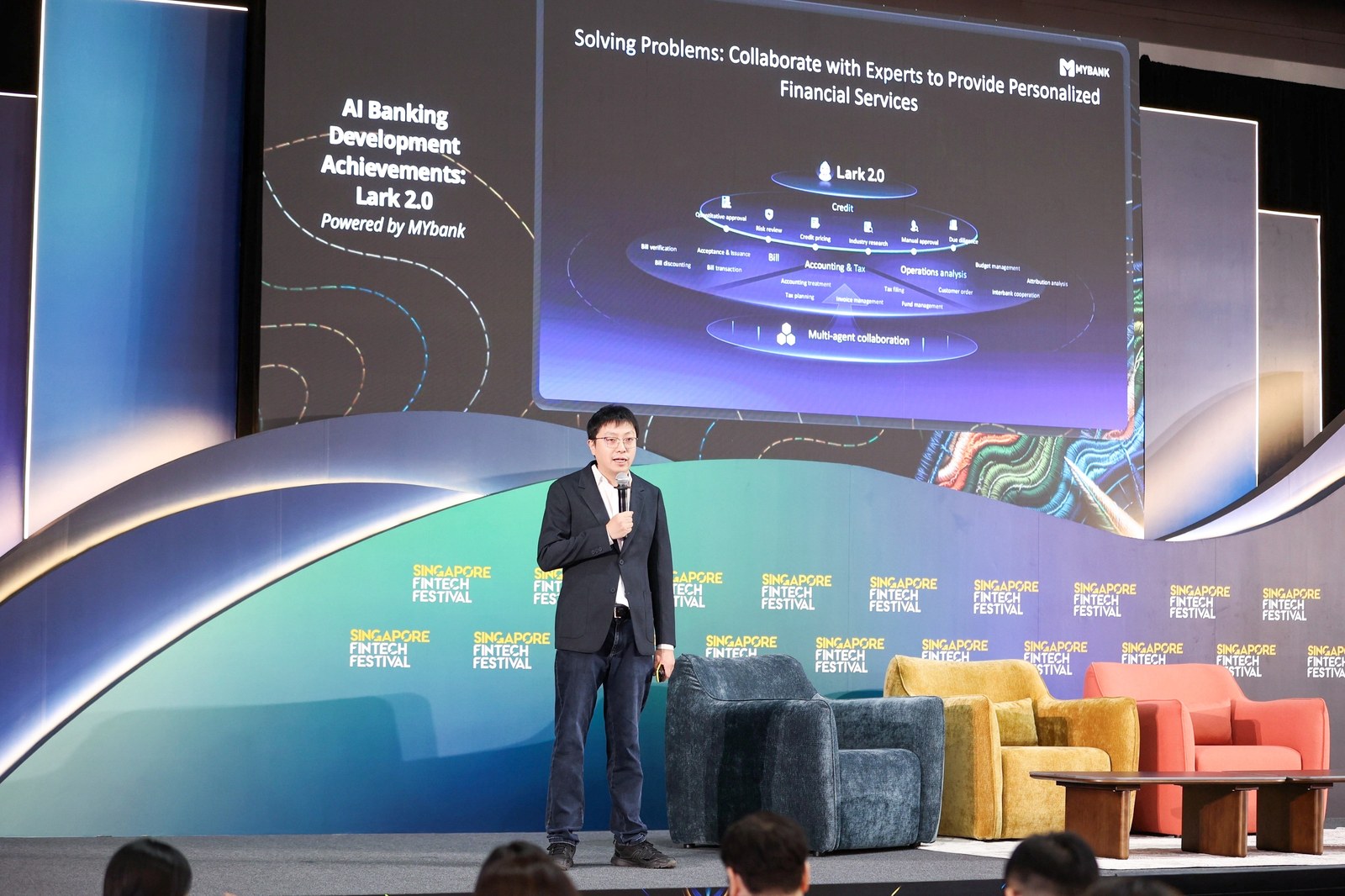
Ma Xiaohang, Chief Information Officer of MYbank, introducing Lark 2.0 at SFF 2026.
The most concrete number in Ma Xiaohang’s presentation at the Singapore FinTech Festival was ten minutes. That was how long MYbank said it took, from the moment a restaurant owner surnamed Wang asked for a higher credit line, to an approved plan raising his facility to RMB 400,000 — released in tranches as his second restaurant is built out. For financing of that complexity, the bank said the previous path took about three days and called on several departments.
What Wang got was not a product from a menu but a plan. Over a few rounds of conversation the agent, Lark 2.0, worked through his business case, identified a funding gap of roughly RMB 400,000, assembled the supporting materials and submitted them for review. It was the kind of service banking has long called private: an adviser who knows the business, prices to it, and moves before being asked. What was new was the customer. He runs one restaurant.
What actually changed
Lark 2.0 was launched in September at the Inclusion Conference on the Bund. MYbank describes it as the first inclusive-finance agent for small and micro enterprises, open to 42 million business owners through the bank’s app and mini-program, with three services behind the same conversation: business lending, an AI tax assistant and an AI manager for bills.
Ma, the bank’s chief information officer, framed the change around the shape of the answer. Inclusive finance, he said, was moving from “standard answers” calculated on existing information to answers “generated in real time” based on the owner’s actual need — the difference between being scored and being asked. The agent draws on operational information the customer has authorised. And the bank is explicit that approval stays with people: in Wang’s case, a human approver signed off before the facility was issued.
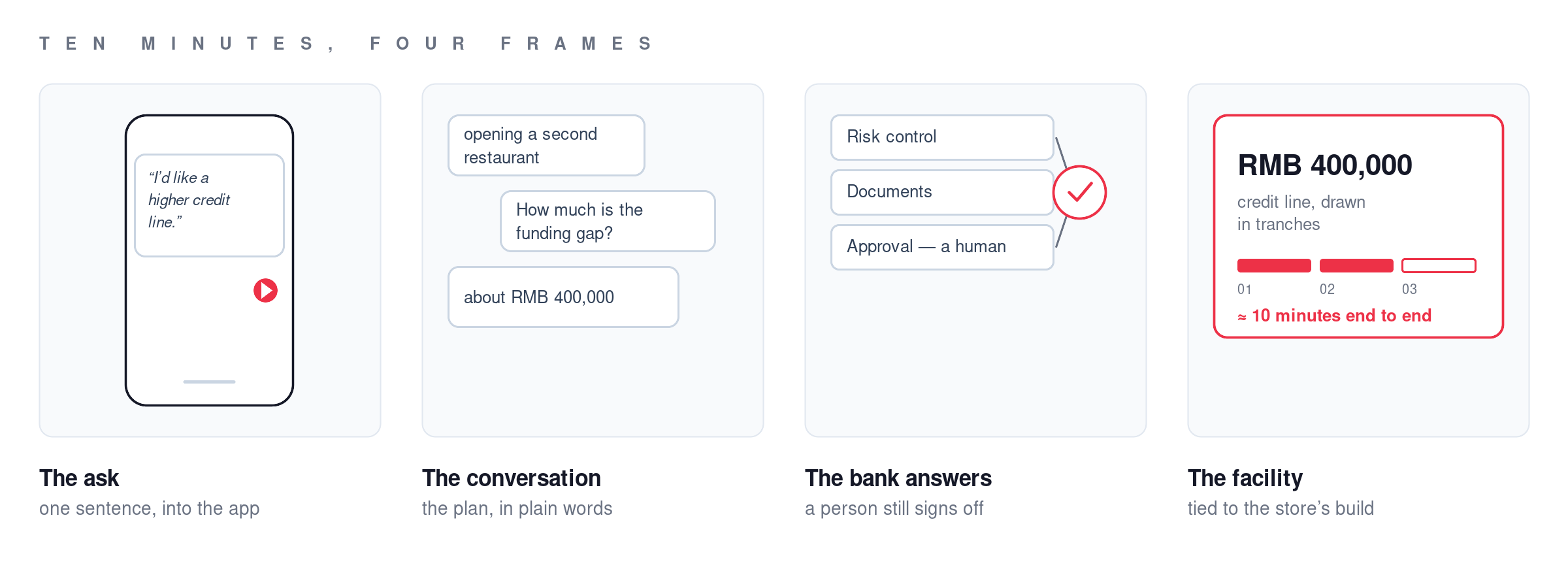 Figure 1 · The ten-minute case, in four frames.
His description of the underlying problem was sharper than the product adjectives. “Whether a bank serves its customers well depends not on willingness, but on capability,” he said on stage. Information about small businesses is scattered and volatile; a bank’s expertise is locked inside departments. An agent that can reach neither is a chatbot.
Three phases behind one conversation
MYbank’s own history makes the pitch easier to read. Founded in 2015 as one of China’s first private pilot banks, it opened with no branches and its core system entirely on the cloud, and built its name on the “310” model: three minutes to apply for a collateral-free loan on a phone, less than one minute to approve, zero human touch. That was phase one — digital banking.
Phase two built the ecosystem around the loan. At the Singapore FinTech Festival in 2023 the bank showed Tomtit, which reads satellite remote sensing for farm credit, and Goose, which handles supply-chain finance, alongside a first Lark that managed credit limits conversationally. By then Lark had eight million users; the bank said it had raised their limits by an average of about RMB 45,000. At last year’s festival, MYbank presented an AI credit assistant for larger small-business loans of RMB 500,000 to 2 million, and said its agreement with human credit officers climbed to 90% from 39% over five months.
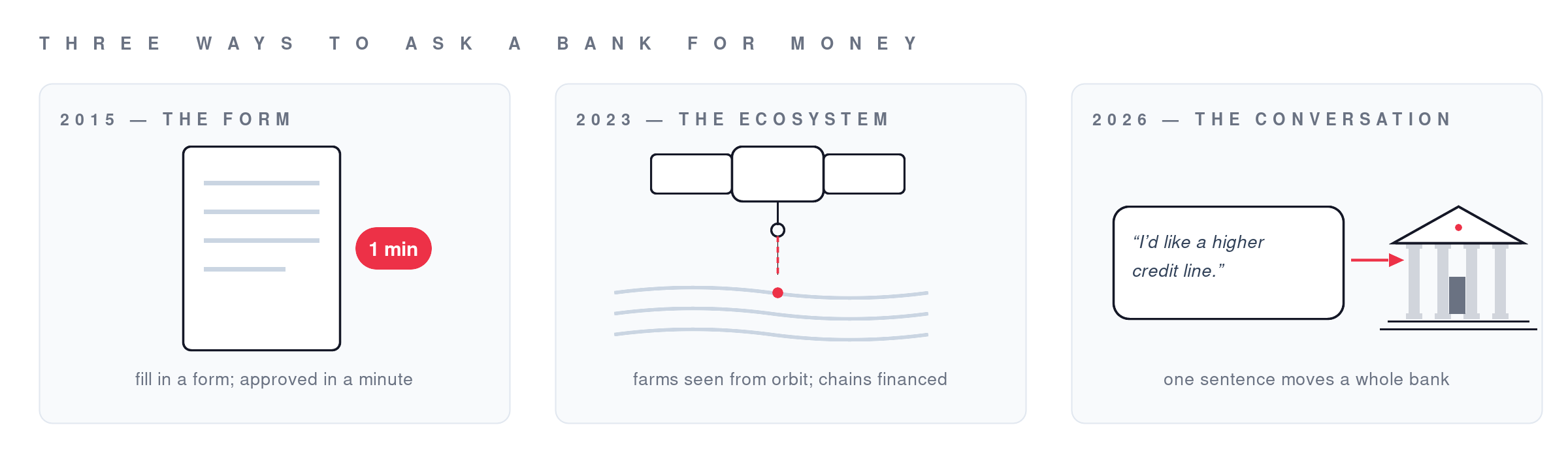 Figure 2 · Three ways to ask a bank for money.
Phase three is the agent, and the numbers attached to it are bigger. Beside Lark 2.0 the bank has built eight AI workbenches and adopted an “Agent First” principle: gathering information, analysis and execution go to AI first, while employees set standards, review results and make judgment calls at the key moments. The bank says its quantitative risk-control workbench cut the mishandling of legitimate business owners by about 40%; its human-review workbench lifted capacity for complex loan applications nearly twenty-fold; and its product R&D workbench cut the time to a first working version from 33 days to two.
These are the bank’s own figures, and no outside party has audited them — “mishandling”, in particular, is a category whose size depends on how you count. But they describe where the effort went. The chat window is the visible part of Lark 2.0; the workbenches, which reorganise how the bank’s expertise is stored and invoked, are the product.
Video · MYbank’s own recording of the ten-minute case, 2 min 27 sec. Source: MYbank.
Why China got here first
Nothing in the American or European market looks quite like this yet, and the gap is instructive. The assistants at large Western banks are service chatbots; the serious AI in Western wealth management sits with advisers, not customers; and SME fintechs such as Britain’s iwoca automate decisions rather than conversations — more than 80% of its customers get an instant decision, according to its chief executive. In October, Reuters reported that several of the largest US banks were restricting third-party AI agents inside customer accounts: travel in the opposite direction.
The nearest peers were early. Nubank in Latin America launched a consumer “AI private banker” in June. Narrative, a Dublin company, is piloting an AI relationship manager for small businesses with Bank of Ireland and three other European banks. Neither is a chartered bank issuing credit lines through an agent at national scale.
The Chinese preconditions were specific. MYbank was branchless and cloud-native from its first day, so an agent has no legacy channel to route around and no branch network whose economics need protecting; a single market with 42 million target businesses — 77 million served cumulatively, by the bank’s count — makes the model’s cost payable. And customers arrived trained. Alipay’s super agent Ah Bao, launched in June, offers 10,000-odd everyday services, and this autumn added a “Coffee Alarm Clock” with Starbucks: say the sentence once, and it buys the iced Americano at ten every morning. Ant Group’s health assistant, Afu, works the same way. A population that already delegates errands to conversation will delegate a credit line.
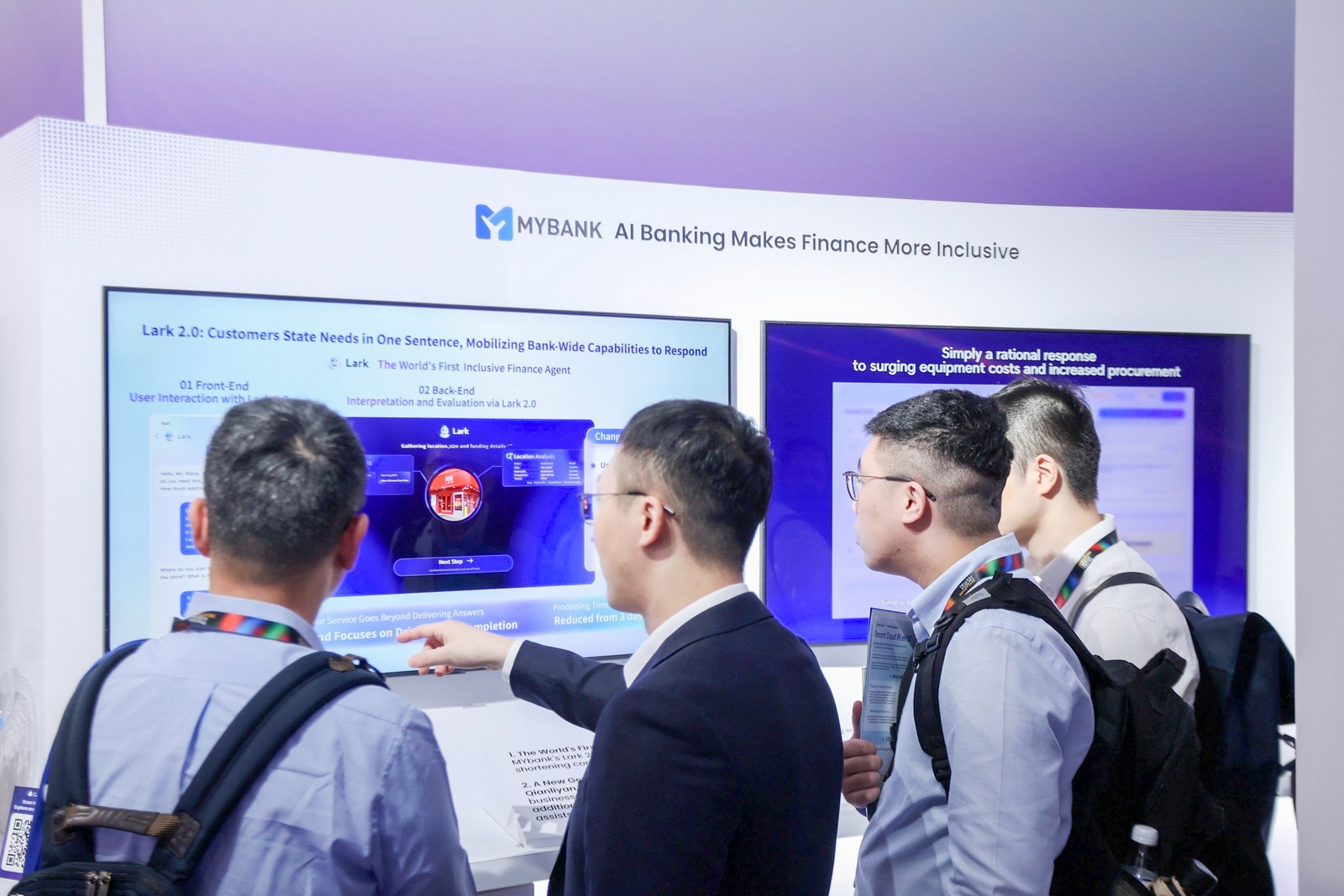 MYbank exhibits Lark 2.0 at SFF 2026.
What it still is not
The boundary is worth stating plainly, because the presentation blurred it. Wang’s facility was approved by a person, and the bank says credit and disbursement decisions remain with authorised staff and systems, traceable and interruptible. That is the right design, and it is also the limit: the agent proposes; the bank disposes. “AI CFO”, the bank’s phrase, is a promise about service, not autonomy.
The case was also one case, chosen by the bank, about a customer it already knew. Whether ten minutes survives contact with a thin file — a first-time borrower, a seasonal business, an owner whose numbers are real but unaudited — is the question inclusive finance has always been judged on, and the one a demo cannot answer.
The presentation did not settle whether ten minutes changes lending or only its interface. Watch, instead, what rivals copy. The chat window is easy. The reorganisation behind it is not.