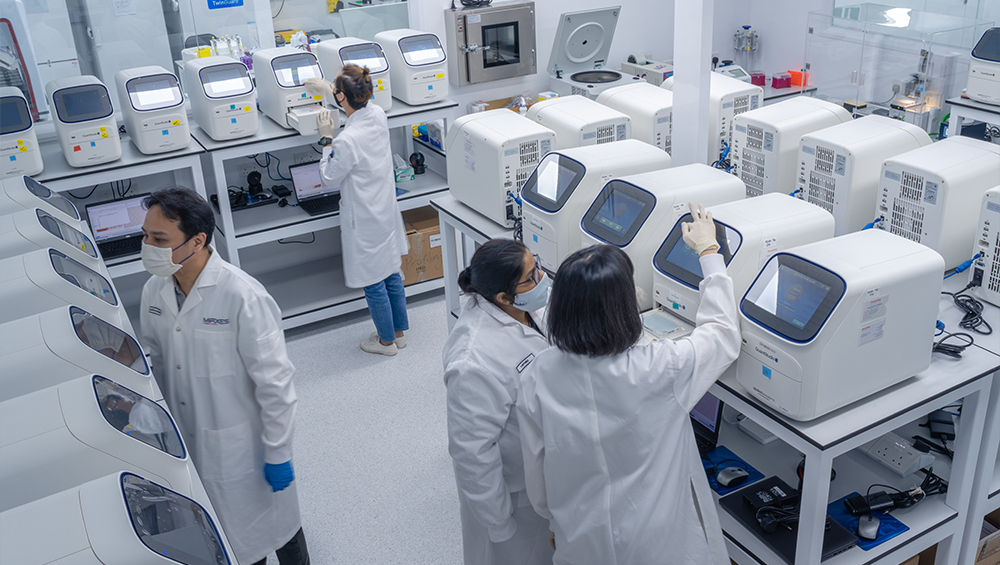
MiRXES, a Singapore diagnostics company, has raised US$77 million in a Series C round led by the CR-CP Life Science Fund, with Rock Springs Capital, EDBI and other institutions from the United States, Singapore and Hong Kong. The company says the round takes its total funding since it was founded in 2014 to US$120 million, and that most of it will go to its pipeline of blood tests for the early detection of cancer.
The product the money is aimed at, GASTROClear, is described by the company as the world's first RNA-based blood test for the early detection of gastric cancer. MiRXES says its China operation is running a 12,000-patient prospective trial to seek registration with the country's regulator, and that it is pursuing approval in Japan and in other places with high rates of the disease.
Why a test is not yet a screening programme
Gastric cancer is common in East Asia and is often found late, so a blood test that flags it earlier would matter. But the distance between a validated assay and a screening programme is measured in logistics: who is offered the test, whether a positive result leads quickly to an endoscopy, and who pays for the follow-up. The trial MiRXES describes is designed to answer the regulatory question, not the operational one.
The company frames its work as preventive healthcare for ageing populations, and its chief executive, Lihan Zhou, says early detection will deliver clinical and economic benefit as those populations age. That is a reasonable claim and a largely unmet one; it is also a claim that depends on health systems choosing to buy the test at scale rather than on the test working.
The figures are the company's own, and much of its 45-country footprint is research and laboratory supply rather than routine screening. The round buys time to prove the test performs at population scale; it cannot by itself build the follow-up that makes a screening test useful.