
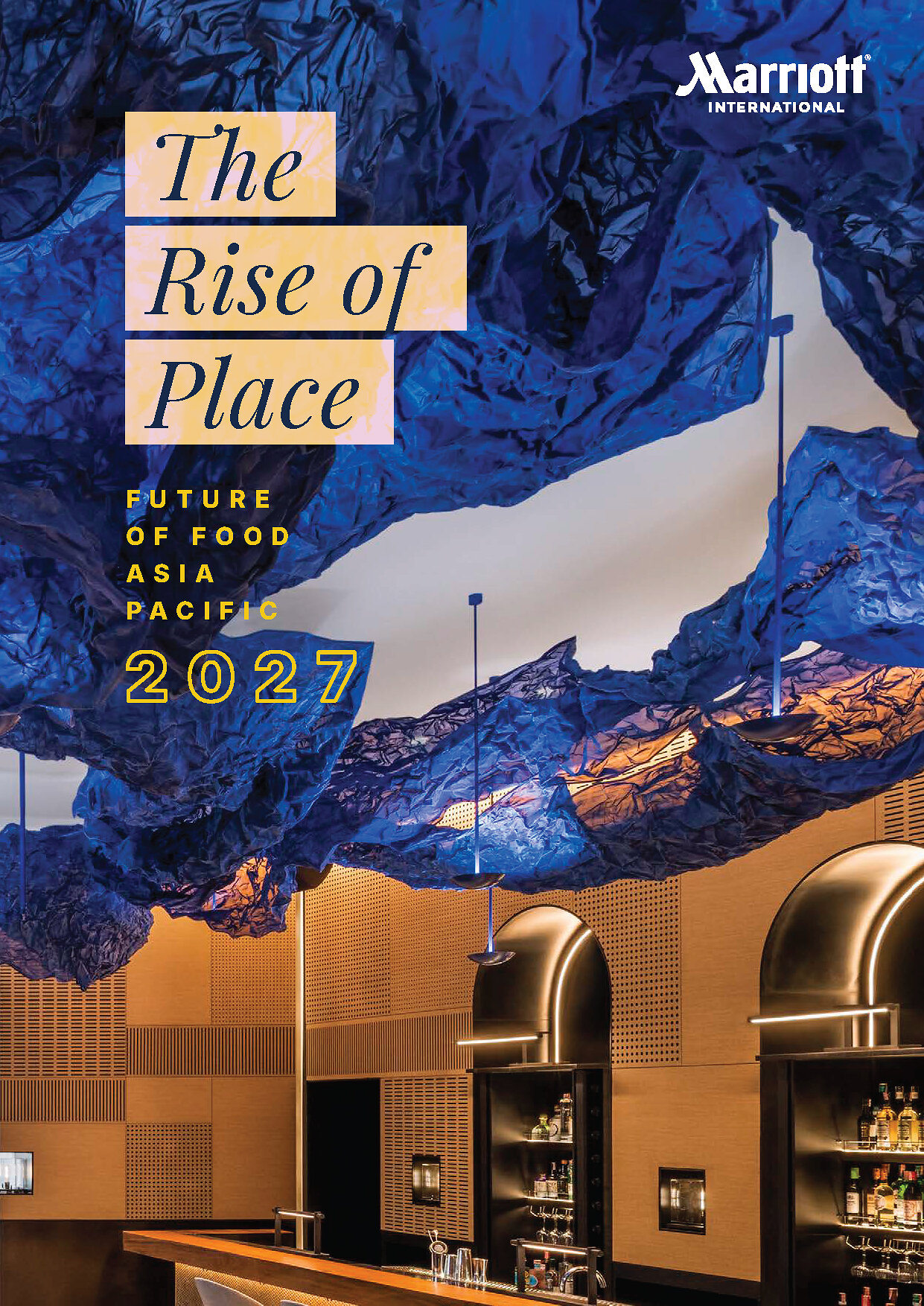
Marriott International has released Future of Food 2027, a report on food and beverage trends across Asia Pacific excluding China. It draws on conversations with chefs, hospitality experts and regional influencers, along with insights from the company's properties in the region, the company said. The report describes a move toward what it calls the rise of place, as dining spreads beyond traditional restaurant settings into more fluid, social formats.
Demand for local signature dishes was identified by 95% of surveyed properties as the biggest trend in their market, ahead of value for money. Nearly half of the properties surveyed reported growing demand for casual venues such as lounges, bars and outdoor settings, and the report points to emerging concepts with 40 to 60 seats and distinct identities. In Vietnam, 71% of surveyed properties reported growth in bar and lounge dining. Four in five properties introduced new local ingredients over the past year, and almost three-quarters reported local ingredients appearing more often on beverage menus. Demand for local signature cuisine reached 71% in India and 67% in Indonesia.
Fine dining is getting shorter. Fifty-eight per cent of properties reported average fine dining experiences of between 1.5 and 2 hours, with Singapore among the fastest-paced markets at 85% reporting an average of 1.5 hours. One in five establishments in South Korea have reduced the number of courses served, and 30% of fine dining restaurants in the Philippines have added a la carte menus. The report also cites Australia, where it says fewer courses and shorter service times are being discussed in terms of standout moments rather than course counts.
Artificial intelligence is supporting menu development, marketing, staffing and guest insights, according to the report, which says 100% of restaurants and bars surveyed in Thailand already use it in their operations. On wellness, 97% of surveyed properties serve dishes associated with health and longevity, and the report notes healthier mini-bars and wellness-focused turndown experiences. Among restaurants and bars surveyed, 42% reported increased sales of non-alcoholic beverages. Marriott also said it will introduce its APEC Plant-Forward Program across the region in 2027, describing itself as one of the first major global hotel groups to make plant-forward dining a permanent part of its operations.
Petr Raba, the company's vice president of food and beverage for Asia Pacific excluding China, said smaller, intentional spaces were replacing formal dining models and that hotels were taking on the role of cultural storytellers, drawing on regional talent and locally sourced ingredients. A dish featuring Wagin duck at Hearth at The Ritz-Carlton, Perth is cited as an example. The full report is published by the company.