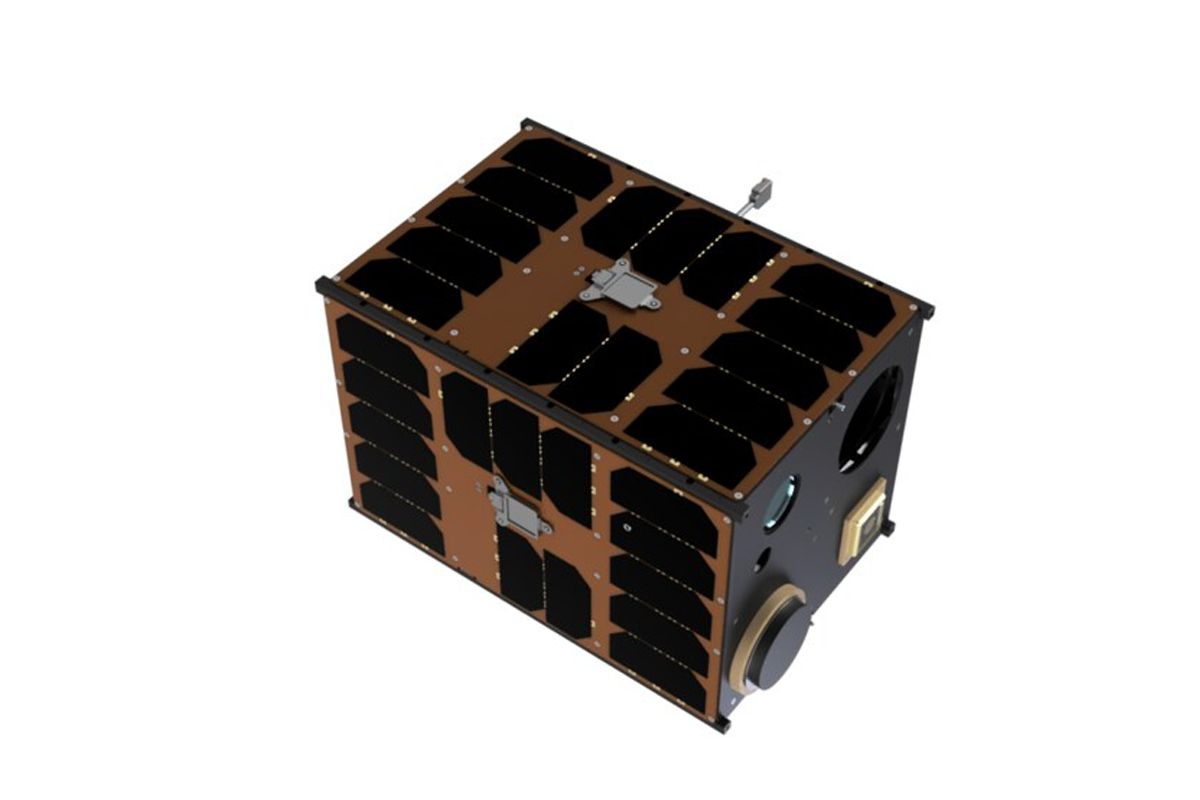
GITAI, a space robotics company with a United States arm and a Japanese subsidiary, says its first satellite demonstration met every criterion it set. The spacecraft, a 16U satellite called SC1, launched on 21 December 2024 on a SpaceX Falcon 9 rideshare mission, and the company announced the results on 27 January.
A company whose product is a robot needs a spacecraft to carry it, which is why a robotics firm builds a satellite bus. GITAI's stated goal is to cut the cost of working in space by a hundred times, and its plan has two halves: robotic arms that service satellites already in orbit, and machines that build on the Moon. The company had already demonstrated an arm inside the International Space Station in 2021 and outside it in 2024; the satellite is the other half of the system.
Three boxes ticked, and the hard one still ahead
The criteria were reliable contact with GITAI's control centre in Torrance, California; correct operation of the onboard sensors, actuators and computers, including attitude control by reaction wheels and manoeuvring by propulsion; and the capture and transmission of images and video. The company says SC1 validates its ability to produce space-qualified components in-house, and that it is developing propulsion, reaction wheels, magnetorquers and star trackers itself, aiming to finish by 2025. The next demonstration, planned for 2026, would use a 500-kilogram satellite with a robotic arm and a target craft to attempt rendezvous and docking.
All three criteria describe the ordinary functions of a working satellite; none of them is robotic servicing. Full success is measured against a bar the company set for itself, and the capability that matters commercially — approaching and working on another operator's satellite — is still a future mission. A claim to cut costs a hundredfold is a target rather than a result, and a small demonstration satellite is an early step along it.