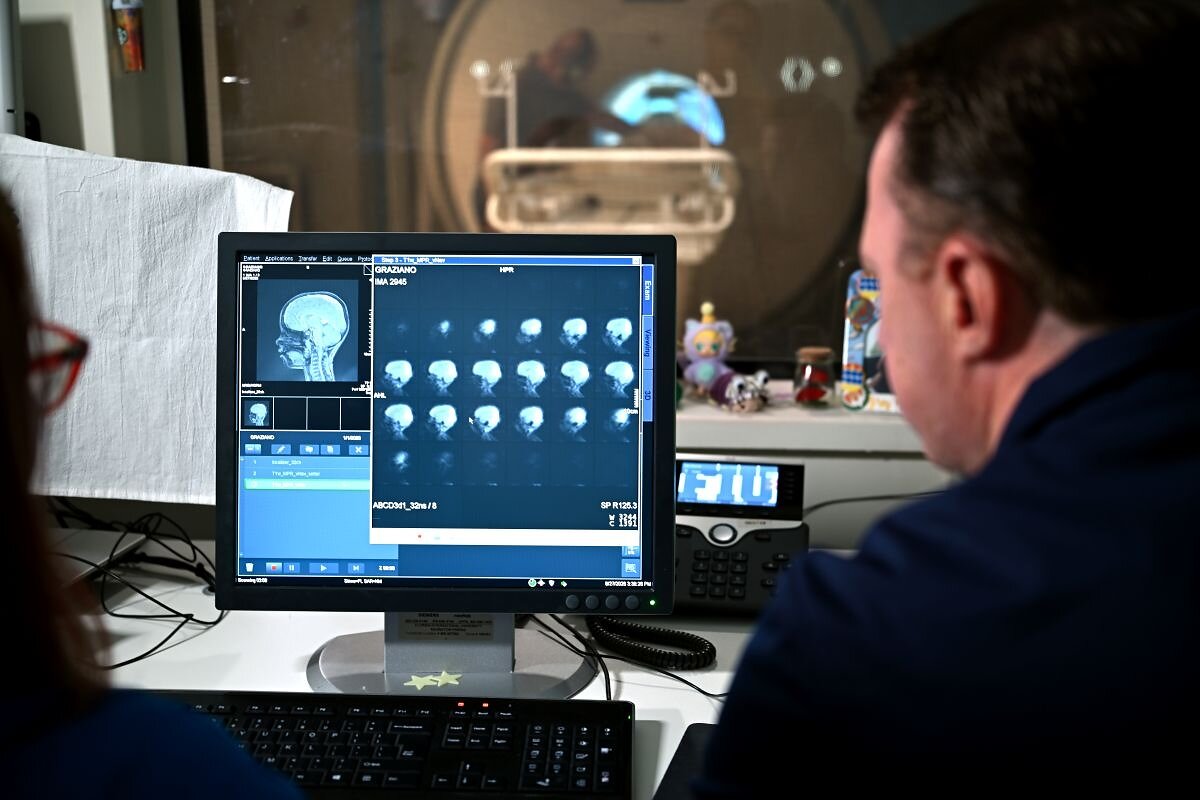
Children as young as 4 with a higher body mass index showed differences in several brain regions involved in reward, taste and hunger, Florida International University said in announcing a new study from the university. The findings suggest the link between obesity risk and the developing brain may begin years earlier than scientists had realized.
The study, published in the Nature Portfolio journal Scientific Reports, is one of the first to use an advanced MRI technique to examine obesity risk and brain development in preschool-aged children. Researchers at the university's Center for Children and Families scanned 159 children ages 4 to 7, 81 with ADHD and 78 without, using a technique called Restriction Spectrum Imaging. They compared the scans with BMI, waist circumference and body fat percentage, and found that only BMI was associated with differences in the brain.
Children with a higher BMI showed differences in regions involved in reward, motivation, taste and craving, the researchers said. They also reported a small signal in the hypothalamus, which helps regulate hunger, and said that result needs to be confirmed in follow-up work. The team also described a finding involving the insula, a region that had not come up in similar studies of older children.
The researchers had expected children with ADHD to show a stronger link between brain changes and BMI, since ADHD has been tied to some of the same reward circuits and to impulsive behavior. Instead, the two groups showed the same overall pattern, the authors said. Mohammadreza Bayat, the study's lead author, said earlier work had identified similar patterns in adolescents and that this study moves that timeline back several years; the results show a connection, he said, not that one factor causes the other.
The researchers noted the study captured a single point in time, so it cannot determine whether brain differences came before changes in body weight, resulted from them or influenced one another. They said the findings are not a reason for parents to change how they approach their children's nutrition or physical activity. The team plans to keep following children over time and to pair brain imaging with direct measures of metabolism and inflammation.