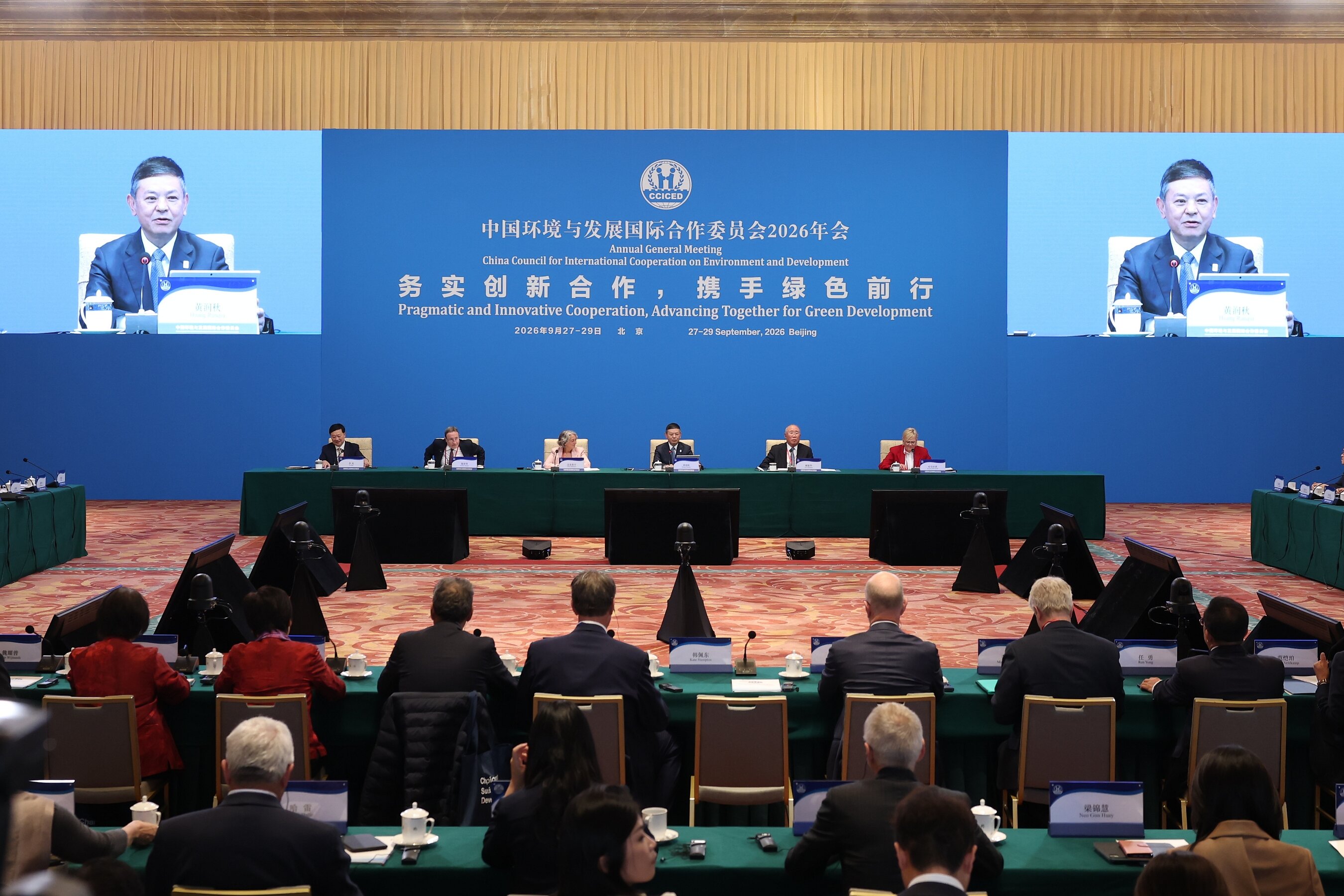
Climate and environment specialists gathered in Beijing on Sunday for the opening of the three-day annual general meeting of the China Council for International Cooperation on Environment and Development, where they praised China's green transition in practice and called for faster international cooperation, according to a China Daily report. The meeting is themed on pragmatic and innovative cooperation for green development and is intended to produce policy recommendations through exchanges and joint research.
Huang Runqiu, the council's Chinese executive vice-chairperson and China's minister of ecology and environment, said climate change, biodiversity loss and environmental pollution were deepening as a triple crisis for sustainable development. He said China had built the world's largest clean power and clean steel production systems, with ultra-low-emission retrofits covering 1.17 billion kilowatts of coal-fired power capacity and 990 million metric tons of crude steel capacity, and led the world with 101 nuclear power units in operation or under construction.
Julie Dabrusin, the council's international executive vice-chairperson and Canada's minister of environment and climate change, described Canada's long-standing commitment to the council as a cornerstone of bilateral cooperation between the two countries. She pointed to Canadian progress on clean electricity grids, methane reduction and nature conservation, and said the council's research on plastics and the circular economy remained important for a legally binding global plastics treaty.
Xie Zhenhua, China's former special envoy on climate change, called for open, inclusive and pragmatic cooperation and urged the international community to build confidence and concentrate on carrying out nationally determined contributions, cautioning against unilateralism. Achim Steiner, former administrator of the United Nations Development Programme, said China had overturned basic assumptions about environment and development, citing the Ecological and Environmental Code that took effect on Aug 15 and the 15th Five-Year Plan for 2026-30. Kristin Halvorsen, former director of Norway's CICERO Center for International Climate Research, said that plan turned climate commitments into coordinated action across government, and that cooperation on climate and the environment was a strategic necessity rather than a luxury in a fragmented geopolitical landscape.