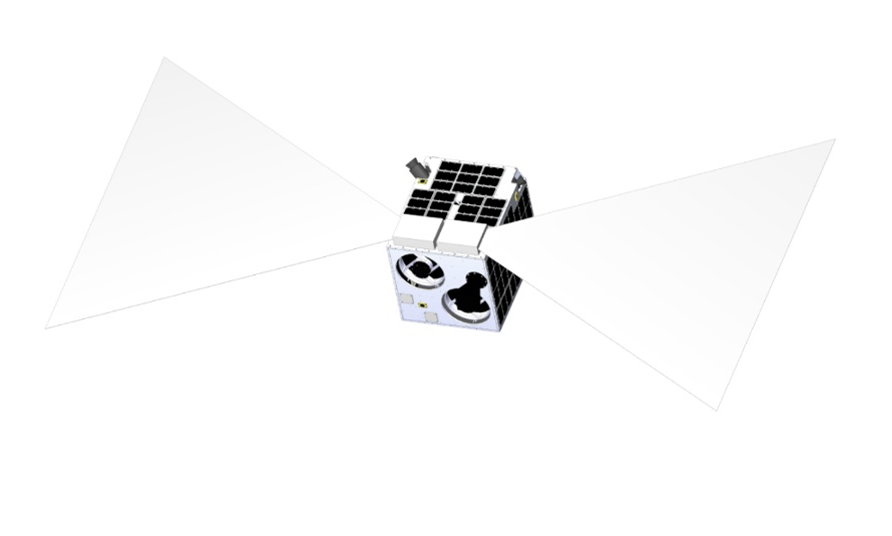
Axelspace has been selected by the Japan Aerospace Exploration Agency for a technology demonstration flight, with a project it calls D-SAIL: a membrane surface that unfurls after a satellite finishes working, to drag it out of orbit faster. The selection is part of JAXA's fourth Innovative Satellite Technology Demonstration, and it gives a second chance to a theme that was lost when the third demonstration mission failed to reach orbit in October 2022.
The mechanism rests on a simple fact about low Earth orbit. There is still a thin atmosphere there, and a large, light surface increases the drag that slows a satellite and pulls it down. Under current international guidelines, operators are asked to bring satellites down within 25 years of the end of their work; the United States regulator has moved the expectation to five years, and the trend is towards shorter periods.
A sail is only half of the problem
The membrane, developed with a Japanese manufacturer, is intended to be fitted as standard to Axelspace's satellites rather than offered as an option, which is where its value would lie: a deorbit device only helps the debris problem if it is on the spacecraft before launch, not added later. The company describes a wider internal standard it calls a green spacecraft, covering manufacture as well as disposal.
The claim being made is that the mechanism works in principle and deserves a flight. The in-orbit demonstration will show whether a thin membrane deploys reliably in vacuum and after years of storage, which is the sort of thing that is easier to test on the ground than to trust in orbit. A satellite that fails to deploy its sail adds to the problem it was meant to reduce.