

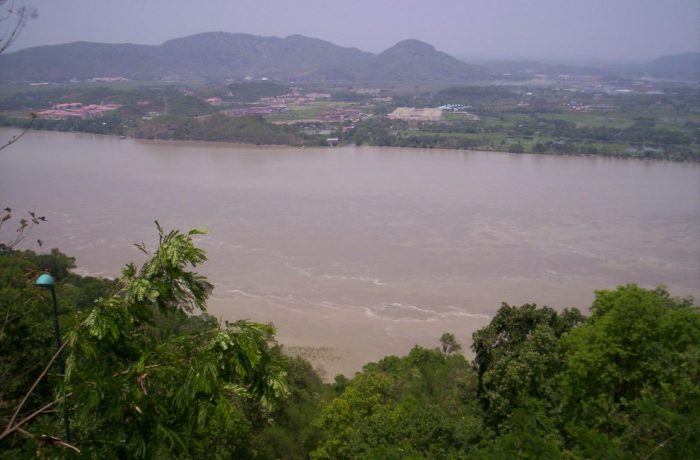
China has announced plans to build the world’s largest hydroelectric dam on the Brahmaputra River on the Tibetan Plateau.
The move is controversial because it could affect tens of millions of people in India and Bangladesh (on the lower reaches of the Brahmaputra River). India issues warning in 2020 If China proceeds with such a project in Tibet, it will be forced to build a 10-gigawatt dam in its remote eastern state of Arunachal Pradesh.
The dam on the lower Brahmaputra River would also be expensive – possibly $40 billion. But China Power Construction Corporation claims that it can generate 300 billion kilowatt hours of electricity every year, which is incredible.
See also: China plans record $411 billion bond issuance in 2025: sources
This would be more than three times the 88.2 billion kWh designed capacity of the Three Gorges Dam in central China, currently the world’s largest.
The plan will play an important role in achieving China’s carbon peak and carbon neutrality goals, stimulating engineering and other related industries, and creating employment opportunities for Tibet. Xinhua News Agency reported Wednesday.
A section of the Brahmaputra River drops as much as 2,000 meters (6,561 feet) in a span of just 50 kilometers (31 miles), providing enormous hydroelectric potential but also unique engineering challenges.
The cost of dam construction, including engineering costs, is also expected to exceed that of the 254.2 billion yuan ($34.83 billion) Three Gorges Dam. This includes the resettlement of 1.4 million displaced people, more than four times the initial estimate of 57 billion yuan.
Authorities have not said how many people the Tibet project will displace or how it will affect the local ecosystem, one of the richest and most diverse on the plateau.
But Tibet’s hydropower projects, which they say contain more than a third of China’s hydropower potential, will not have a significant impact on the environment or downstream water supplies, according to Chinese officials.
Given recent concerns over the state of the country’s economy, one of the reasons the massive dam project was approved may have to do with the thousands of new jobs it will create. High youth unemployment and economic slowdown.

“Weaponization of cross-border rivers”
Sadly, India and Bangladesh are concerned about all the dams China is building on the Brahmaputra because they have the potential to alter not only the local ecology but also the flow and course of the river downstream.
It is said that about 70% of Bangladeshi population lives in the Brahmaputra basin.
Scholars accuse China of ‘weaponizing’ Tibetan water resources“China’s control of water flows raises serious concerns for downstream riparian states because it has the potential to affect water security, economic development, environmental stability, and geopolitical relations,” a paper in March said.
“Such controls could adversely affect water security in these states.”

Jayantha Dhanapala, former deputy secretary-general of the United Nations, said China’s “water diplomacy” is often seen as coercive and raises suspicions about China’s intentions.
Both Vietnam and India accuse China of using water resources to exert political pressure. Neeraj Manhus and Dr. Rahul Lad stated that Vietnam “claimed that China built dams on the Mekong River to divert water from Vietnam, while India accused China of building dams on the Brahmaputra River to reduce the flow of water into India”.
They said China views cross-border rivers as “sovereign resources within its jurisdiction that can be exploited in any way it deems appropriate”. It “considers international water conventions and legally binding treaties on transboundary rivers to be contrary to its national interests and sovereignty.”
China refuses to sign international rivers treaty
They said Beijing refused to sign the 1997 United Nations Convention on the Law of the Non-Navigational Uses of International Watercourses, which aims to establish norms for cooperation and management of transboundary rivers between riparian countries based on the principle of mutually beneficial cooperation.
China’s hydrological dominance of these rivers has fueled debate over whether its actions are harmful or beneficial, particularly with regard to the Mekong and Brahmaputra rivers.
The Brahmaputra River leaves Tibet and flows southward into the Indian states of Arunachal Pradesh and Assam, and finally into Bangladesh where it becomes the Brahmaputra River.
China began building hydroelectric dams in 2015 on the upper reaches of the Brahmaputra River, which flows from west to east.
But a new concern about the latest proposal is that China may be planning to divert water that normally ends up through India and Bangladesh in an ambitious, decades-long scheme to pipe water into the Gobi Desert.
Manhaus and Ladd said: “The proposed western route South-to-North Water Diversion Project It aims to divert water from the Yangtze River in southern China to the Gobi Desert in the north. Construction of the project’s eastern and central canals has already begun, with completion of all three channels expected by 2050.
“The possible involvement of the Brahmaputra River in the project raises concerns about its impact on downstream water supplies in India and Bangladesh,” they said.
“Despite sharing the major cross-border river Brahmaputra, India and China lack a formal water-sharing agreement, fueling concerns and uncertainty surrounding China’s dam-building activities.”
See also:
Climate change costs China $32 billion in just one quarter
World’s second largest hydropower station launched in China – China Business News
China plans massive water conservancy projects to combat droughts, floods
China plans to build giant tunnel to carry water to Beijing – South China Morning Post
China uses 3D printing to build Tibet dam – South China Morning Post
China Yangtze River sells Three Gorges power plant for $12 billion
China seeks to better adapt to climate change as risks rise
China’s Brahmaputra dam plan could lead to India building one too
China worries about costs of climate change
China aims to boost GDP with $142 billion water project